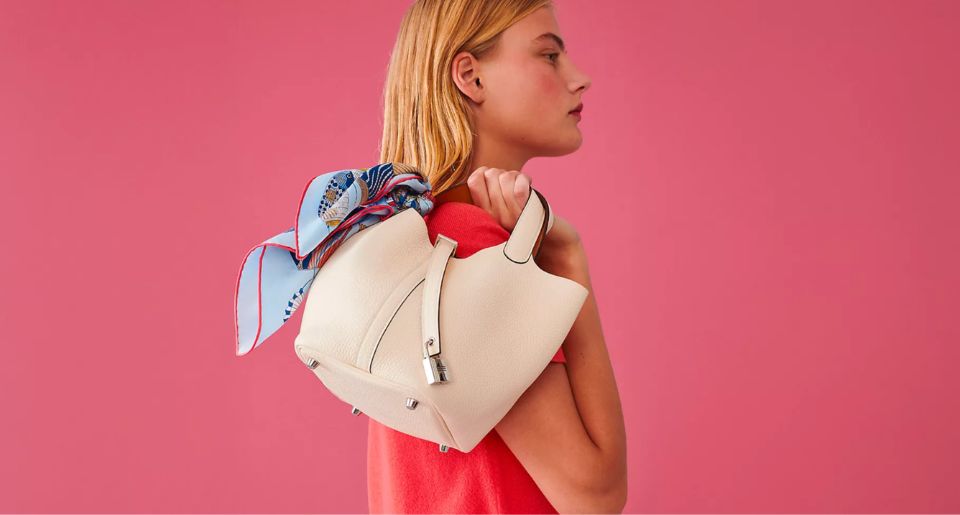
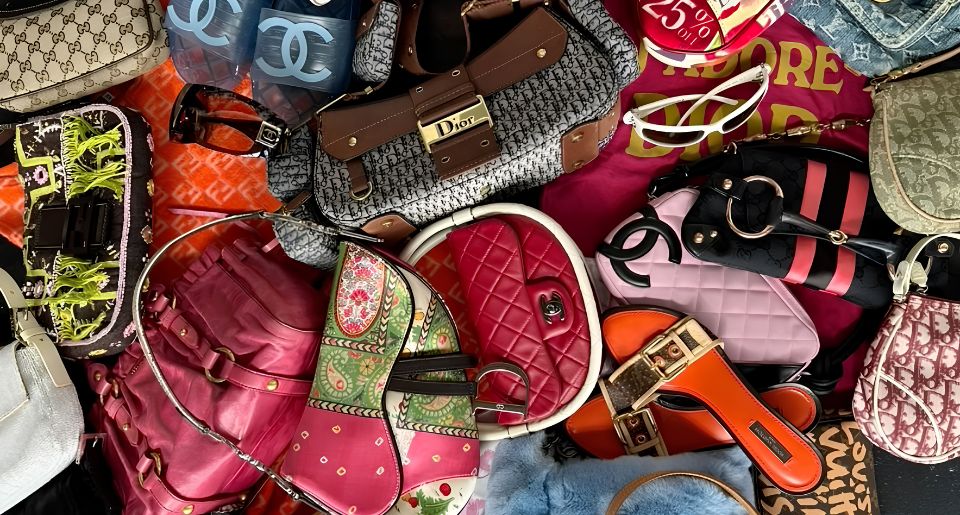
Iconic luxury handbags from brands like Dior, Chanel, and Louis Vuitton continue to drive demand in the resale market.(Image credit: Pinterest)
Luxury resale has evolved far beyond the idea of secondhand shopping. What was once viewed as a practical alternative to retail has become a primary channel for acquisition — a place where seasoned collectors, first-time buyers, stylists, and investors converge.
Yet as the resale market matures, so does its vocabulary.
Pre-owned.
Vintage.
Archive.
These words are used across listings, editorials, and collector conversations, often interchangeably. But they are not interchangeable. Each carries a distinct meaning that influences perception, desirability, and long-term value.
For the informed buyer, understanding the difference is not a matter of semantics. It is a matter of strategy.
To navigate resale intelligently — whether purchasing for wear, curation, or future appreciation — one must first understand what these labels truly represent.
Pre-Owned: The Present, Recontextualized
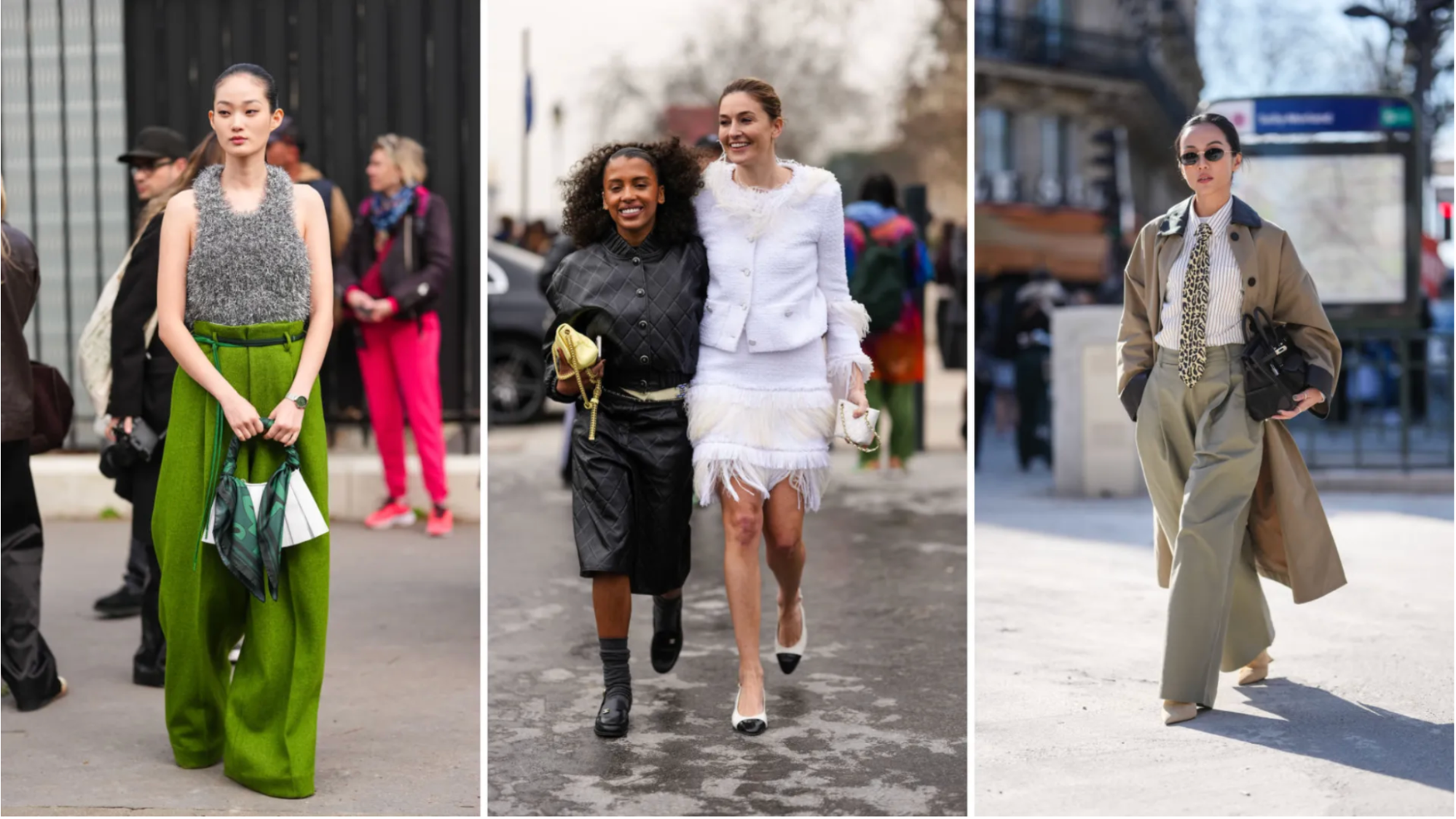
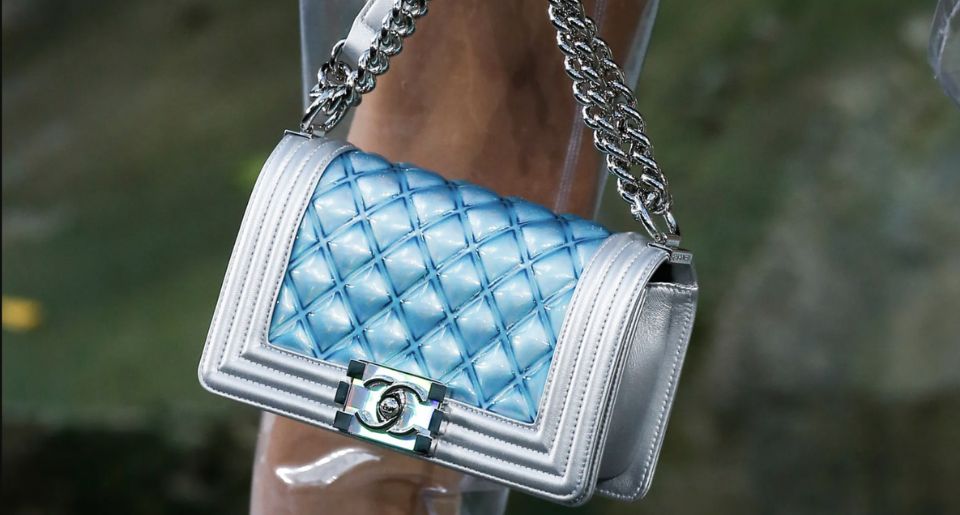
Street style and runway snapshots help show how contemporary luxury handbags are worn today — even when pre‑owned. (Image credit: marie claire)
At its most fundamental level, pre-owned simply refers to ownership history. The piece has had a previous life before arriving on a resale platform. No age requirement. No built-in rarity. No implied historical weight.
A 2022 intrecciato leather bag from Bottega Veneta is pre-owned if it has been purchased and resold. A recent-season loafer from Prada falls into the same category. Even an item from last year’s runway at Saint Laurent qualifies.
In most cases, pre-owned pieces are between one and five years old. They often align closely with current silhouettes, materials, and brand direction. Many still feel contemporary — sometimes indistinguishable from what is currently available in boutiques.
For resale clients, pre-owned represents immediacy. It offers access to sold-out colorways, discontinued sizes, or popular styles that disappeared from retail too quickly. It provides entry into luxury at a more considered price point, often in excellent or near-new condition.
However, pre-owned does not automatically imply collectibility. Its value is typically tied to condition, ongoing demand, and brand desirability in the present moment. The piece may still be part of the brand’s current visual language. It has not yet been shaped by time.
Pre-owned is about circulation — not legacy.
When Time Changes the Narrative: The Meaning of Vintage
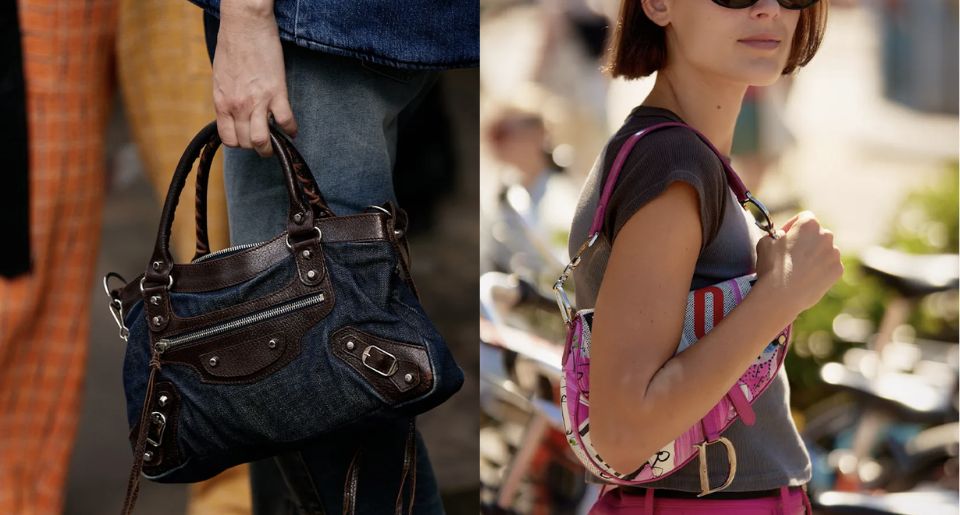
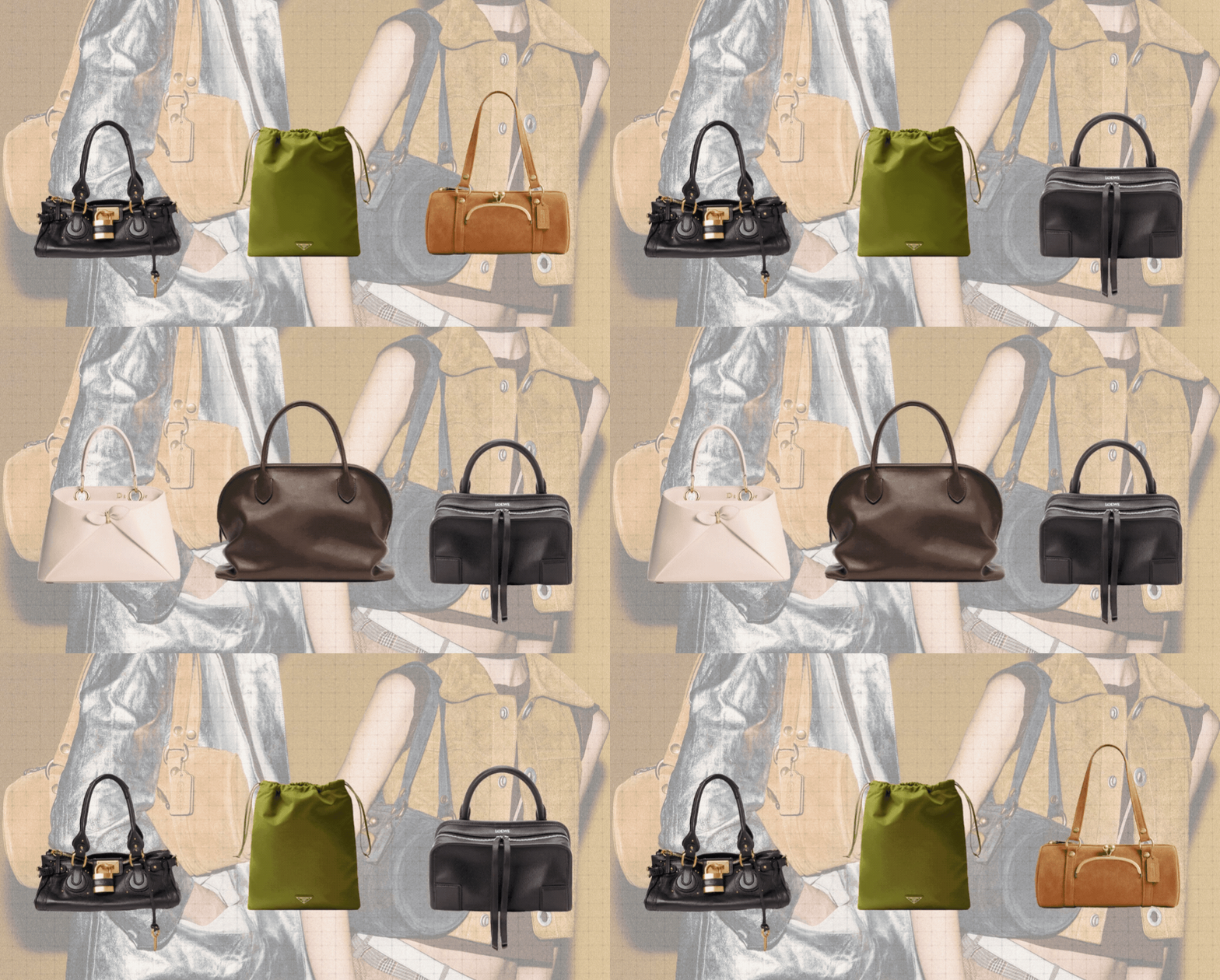
Vintage designer bags — such as early-2000s designs from Balenciaga or the iconic Saddle bag from Dior — often regain popularity as fashion cycles return. (Image credit: Who What Wear)
Vintage begins where time starts to alter perception.
In luxury fashion, the widely accepted threshold for vintage is ten years or more. Some purists extend this to fifteen or twenty years, particularly when discussing highly collectible houses. Regardless of the exact number, what distinguishes vintage from pre-owned is not just age — it is identity.
A mid-2000s bag from Chloé carries the aesthetic codes of that era: the hardware weight, the proportions, the tonal palette. An early 2010s tailored jacket from Dior reflects a different design philosophy than today’s collections.
With vintage, you are no longer purchasing something that merely existed before you owned it. You are purchasing something that belongs to a specific moment in fashion history.
Over time, small details gain significance. Stitching techniques change. Logos evolve. Materials are reformulated. Creative directors come and go. What was once simply “last season” becomes representative of an entire aesthetic period.
Vintage performs strongly in resale for several reasons. Nostalgia cycles revive past decades with remarkable predictability. As new generations discover early-2000s silhouettes or late-1990s minimalism, demand resurfaces for original pieces rather than reinterpretations. Simultaneously, well-preserved examples become increasingly scarce.
Condition becomes a defining factor. A ten-year-old bag in exceptional condition is far rarer than a two-year-old one in similar shape. Supply naturally narrows over time.
But beyond scarcity, vintage carries authorship. It reflects who was designing, what cultural influences were present, and how luxury positioned itself at that moment. It has context.
Vintage is where fashion begins to tell a story.
Archive: The Collector’s Territory
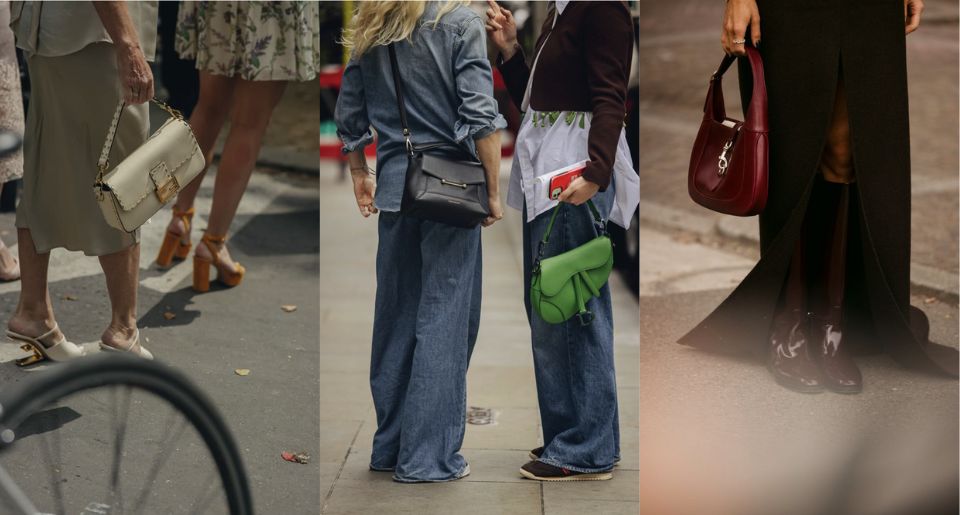
Iconic bags like the Dior Saddle, Fendi Baguette, Gucci Jackie and other era‑defining silhouettes are more than accessories — they are collectible architectural pieces of fashion history that often fetch premium prices in the resale market. (Image credit: purseblog)
If vintage is shaped by time, archive is defined by significance.
The term “archive” is frequently used — and frequently misused. Not every old piece is archive. Not every discontinued item qualifies. Archive implies cultural or creative weight.
An archive piece is typically tied to a defining era under a specific creative director. It may have appeared on the runway. It may have shifted the visual language of a house. It may represent a moment that collectors reference repeatedly.
Consider pieces from Balenciaga during the tenure of Nicolas Ghesquière. That period redefined modern handbag design and established silhouettes that continue to influence the market. Similarly, creations from Dior under John Galliano are regarded as emblematic of a theatrical, transformative chapter in the house’s history.
Archive pieces are sought not merely because they are old, but because they matter.
They represent turning points. They capture creative risk. They reflect innovation that later shaped the broader industry.
Age often overlaps with archive status, but it is not the sole requirement. A piece only five years old could be considered archive if it marked a pivotal moment for a house or defined a widely recognized trend. What distinguishes archive from vintage is not time alone — it is influence.
In resale, archive inventory tends to be limited. When it appears in strong condition, it commands attention. Pricing is often more stable over time, especially when tied to celebrated creative eras. Demand is driven by informed buyers who understand lineage and design evolution.
Archive purchasing is deliberate. It is not driven by trend alignment but by cultural awareness.
This is where collecting becomes curatorial.
Production Terms: Discontinued, Seasonal, Limited
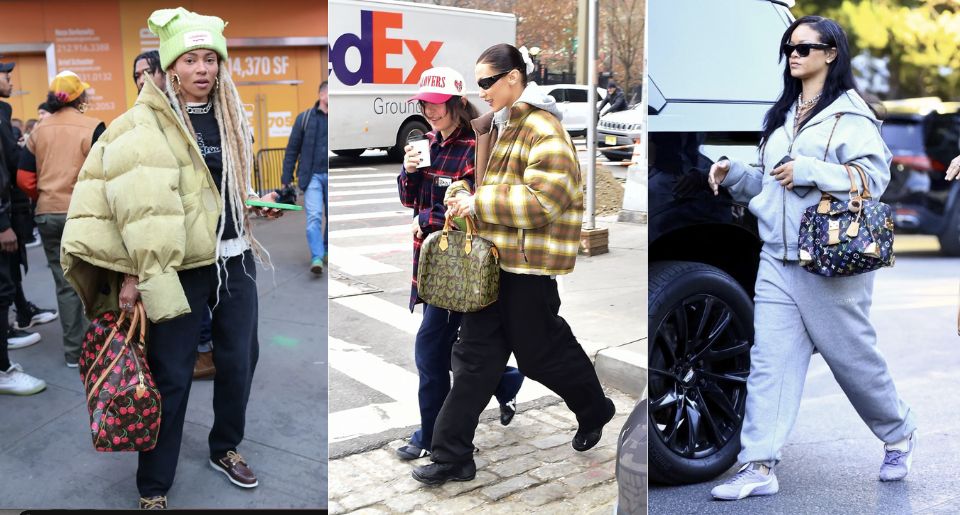
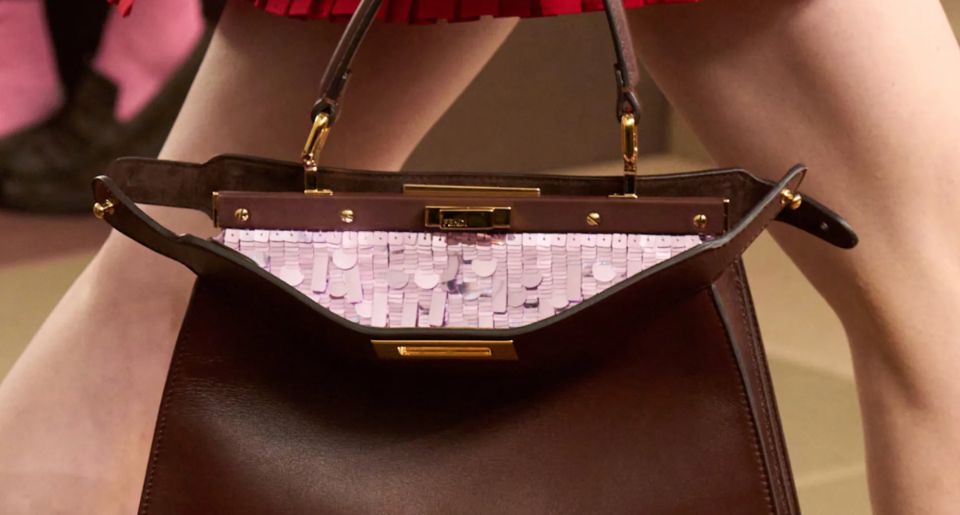
Exclusive LV collaboration edition — highly sought after in resale. (Image credit: vogue - vogue - marie claire)
Complicating matters further are labels related to production strategy rather than historical weight.
A piece described as discontinued simply means the brand no longer manufactures it. A discontinued style from Louis Vuitton might be only three years old. Scarcity begins when production stops, but discontinuation alone does not guarantee long-term demand.
Seasonal items are produced for a particular collection cycle. Some vanish permanently after a single season. Others return in modified form. Their collectibility depends less on seasonality and more on reception and cultural impact.
Limited editions are intentionally produced in restricted quantities. True limited releases can perform strongly in resale — especially when accompanied by high visibility or rapid sell-outs at retail. However, not every limited piece evolves into an archive treasure. Artificial scarcity is not the same as enduring relevance.
For the resale buyer, these terms are signals — but they require interpretation. Scarcity paired with sustained desirability creates value. Scarcity alone does not.
Reading the Market Like a Collector
In a sophisticated resale landscape, informed buyers evaluate more than labels.
They consider the era of design. They assess condition with precision. They understand how creative leadership shapes aesthetic codes. They recognize when a current-season piece might hold future archive potential.
A three-year-old bag may simply be pre-owned — or it may be an early indicator of a defining creative shift. A ten-year-old piece may technically qualify as vintage but hold little cultural weight. Meanwhile, a runway-exclusive design from a celebrated period may quietly appreciate in collector circles.
Resale has matured into a knowledge-based marketplace. The advantage lies with those who understand context.
When browsing, it is worth asking: Is this piece representative of a broader design movement? Does it belong to a pivotal era? Has it influenced what followed? How rare is it in this condition?
The difference between pre-owned, vintage, and archive is ultimately about narrative depth.
Why This Distinction Matters Now
Luxury resale is no longer peripheral. It is integrated into how modern consumers build wardrobes. Younger buyers enter the market with unprecedented access to information. Creative directors themselves reference their houses’ past collections. Brands reissue former hits. Nostalgia cycles accelerate through digital culture.
In this environment, knowledge shapes acquisition.
Pre-owned offers access to the present at a considered price. Vintage offers entry into a defined aesthetic chapter. Archive offers participation in fashion history.
Understanding these distinctions transforms purchasing from transactional to intentional.
Because in a market saturated with product, meaning is what differentiates.
And in the end, the most valuable pieces are rarely defined by how recently they were released — but by how deeply they resonate within the larger story of luxury.