
(Courtesy of L'Officiel)
Contents
The Fendi Baguette is one of those fashion objects that looks almost too simple to justify its reputation. In the late 1990s, when handbags were getting bigger and more practical, Fendi went the other way and made a compact shoulder bag meant to sit tucked under the arm, much like a French baguette carried home from a bakery.
The Baguette kept returning season after season without ever losing the iconic identity that made it loafable in the first place. Suddenly, repeating the same silhouette in different versions felt intentional rather than indulgent, and bags became personal markers of style rather than one-off purchases.
With this in mind, read on for the complete story behind this legendary luxury staple—and what ultimately led the Financial Times to name the Baguette as the “first” true It bag.
The Beginning of a New Kind of “It” Bag
(Courtesy of Who What Wear)
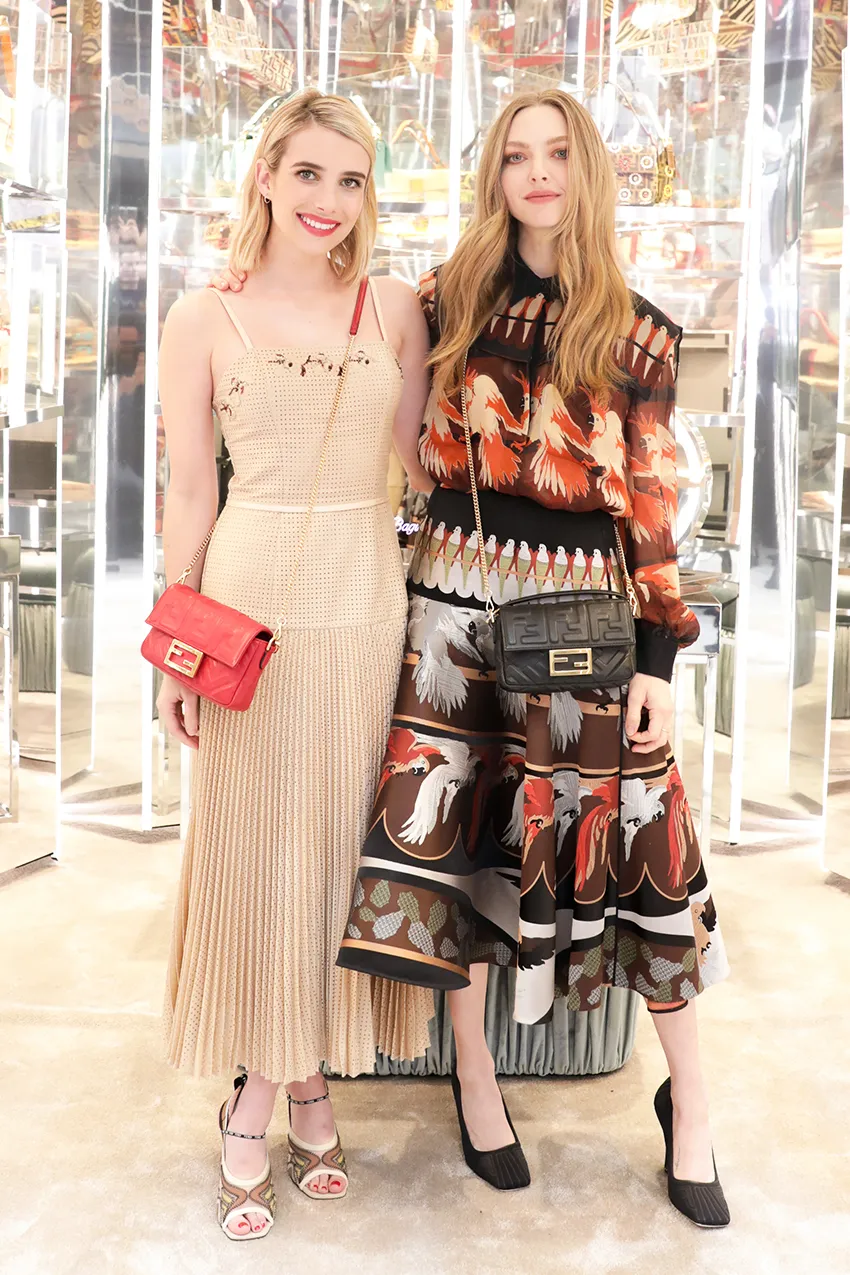
The Baguette—named for its slim shape and the way it tucks neatly under the arm like its French namesake—first appeared on the runway during Fendi’s autumn/winter 1997 show before officially landing in boutiques in 1998.
It was created by Silvia Venturini Fendi, granddaughter of the house’s founders, and shaped under Karl Lagerfeld’s creative vision. The groundbreaking design stood apart from the era’s oversized minimalism, proving that a smaller silhouette could carry just as much attitude.
The Baguette’s concept was almost disarmingly clear. A short strap. A slim profile. A flap closure. Rather than hanging off the body, it settles in and becomes part of how the wearer stands and moves—effortless, instinctive, and completely unforced.
Why the Name “Baguette” Matters More Than It Sounds
(Courtesy of L'Officiel)
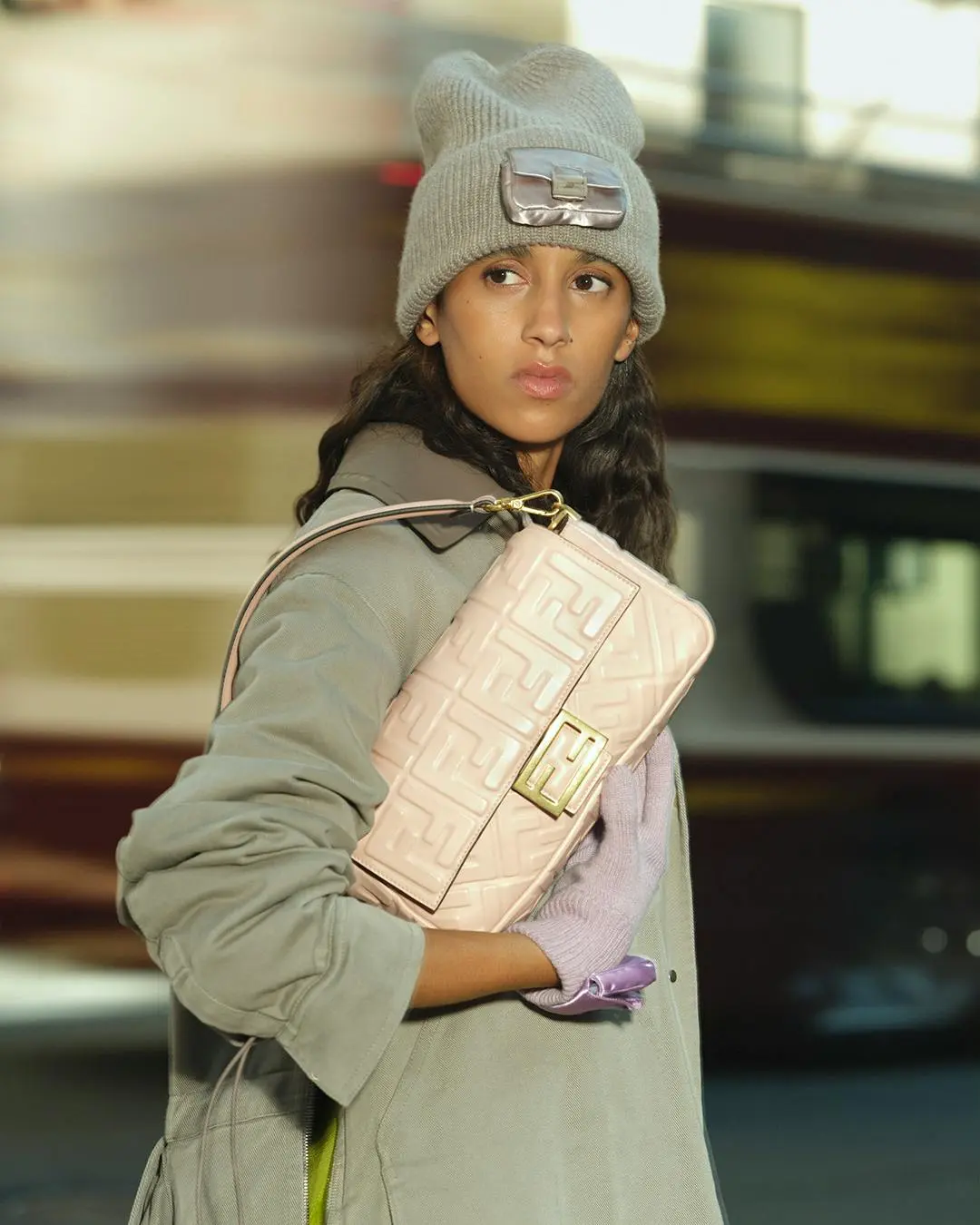
Calling it the Baguette was not just a cute reference—it was a design rule. The name explains exactly how the bag should sit on the body and why its proportions are so precise.
This is also why the bag remained readable even as its fabrics and finishes changed over the years. When a shape is that disciplined, it can handle sequins, embroidery, logo jacquard, beadwork, or leather without losing its identity.
The consistency of the concept could not have been better timed. As fashion entered the late 1990s and early 2000s and began prioritizing how clothes and accessories read in photographs rather than just in real life, the Baguette’s polished yet practical design secured its status as the “It” bag people wore beyond the camera.
“It’s not a bag—it’s a Baguette!”
(Courtesy of @carriebradshawsc)
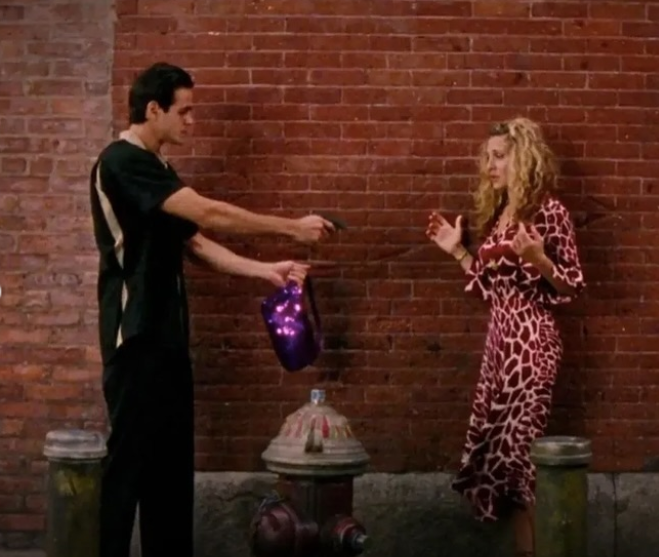
The Baguette’s cultural turning point is widely linked to SATC (1998).
In a Season Three episode titled “What Goes Around Comes Around,” the bag appears during a mugging scene involving Sarah Jessica Parker (playing Carrie Bradshaw). What could have been a fleeting cinematic moment became iconic when she corrected her robber with the now-legendary line, “It’s not a bag—it’s a Baguette!”
The line signals the Baguette’s immense fashion power at the time, implying that the handbag had accumulated enough cultural weight to demand correct naming—even in the middle of chaos.
View this post on Instagram
"Iconic Scene of Carrie Bradshaw ft. Fendi Baguette"
What followed on screen only strengthened the Baguette legend.
Over the span of more than two decades, Carrie Bradshaw has cycled through countless versions of the same disciplined shape, from the multicolored woven style seen in photographs from 2000 to the purple ombré bag she wore front row at the Baguette’s 25th anniversary show in New York in 2022.
The consistency feels entirely intentional. In the reboot, And Just Like That…, she appears with not one but two Baguettes, the iconic purple sequined original and a second pink pailletted version.
Collecting Baguettes as a Natural Outcome (Not Just a Trend)
(Courtesy of T R E A S U R E S of N Y C)
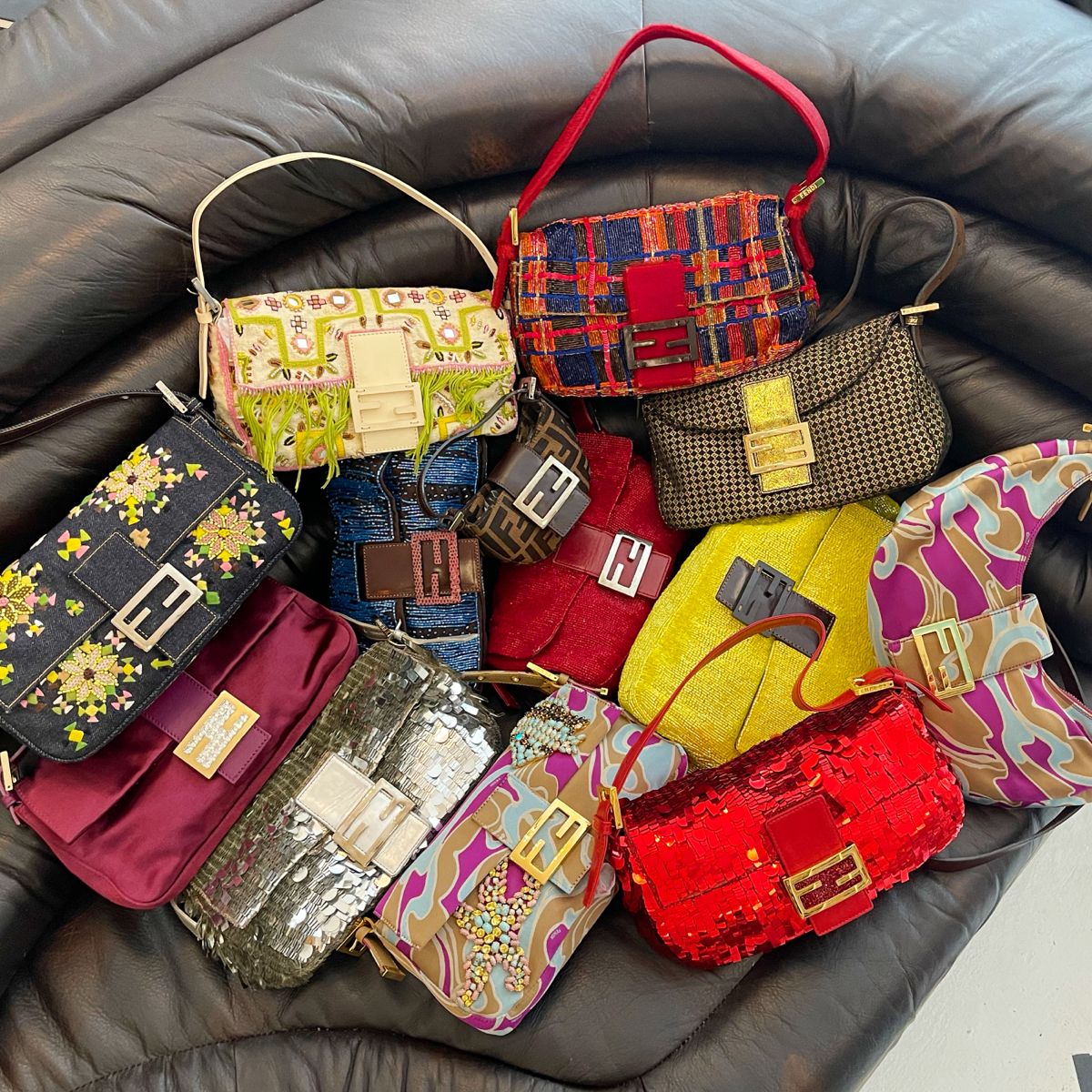
A major part of the Baguette’s story lies in its ability to stay flexible without ever becoming vague. The silhouette remained constant while materials and finishes shifted, quietly encouraging the idea of collecting multiple versions rather than settling for just one.
That endless reinterpretation was also formalized in print. Rizzoli released The Fendi Baguette book in 2012, positioning it as the first book focused on the bag and framing it as one of the most important accessories of its decade, including earning a Fashion Group International accessories award connected to the Baguette’s era of impact.
The Comebacks That Kept the Story Moving Forward
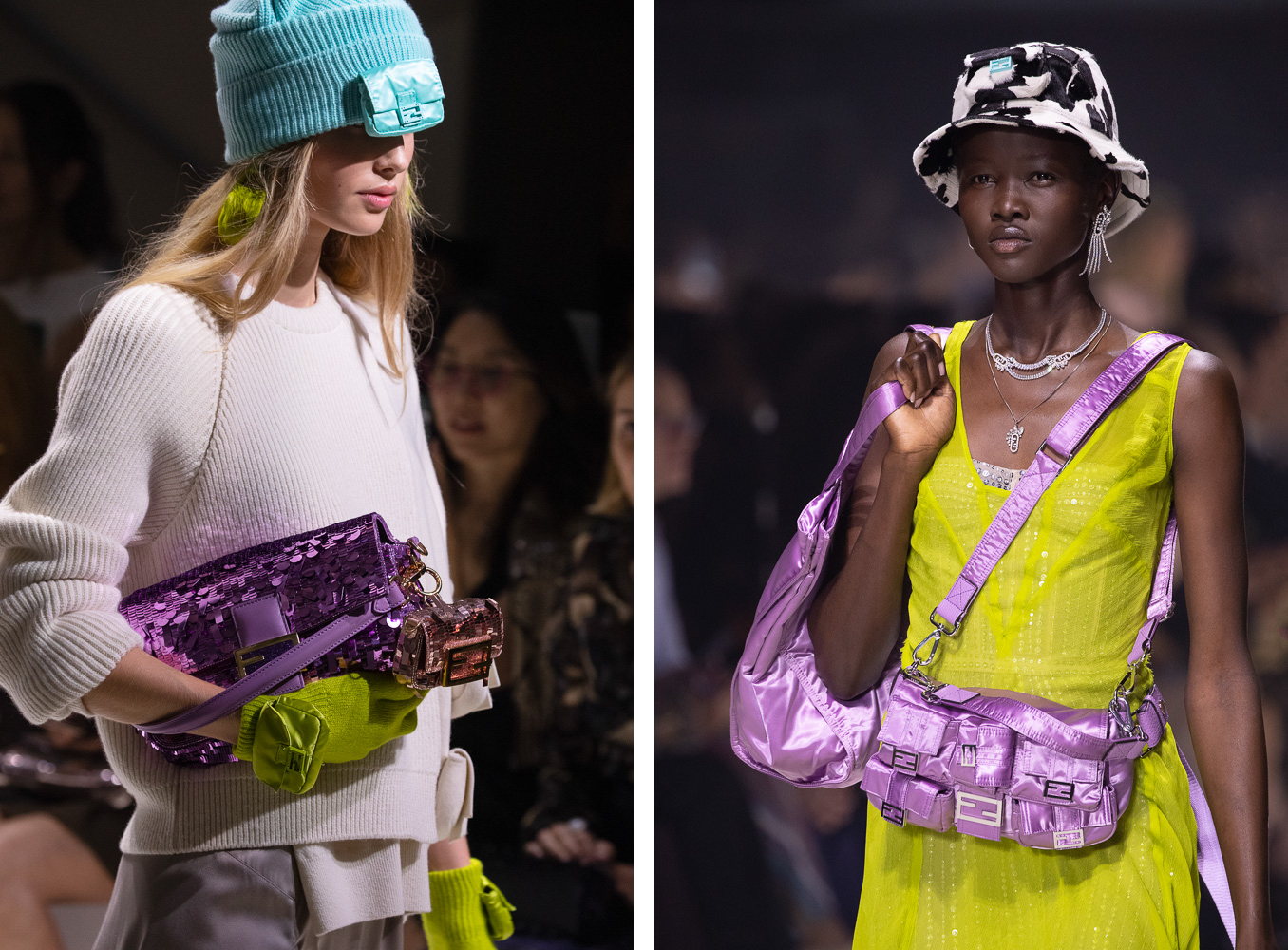
(Courtesy of PurseBlog)
As the late 2010s leaned hard into nostalgia, the Baguette felt ready-made for revival thanks to the clarity of its original design.
In 2019, major fashion outlets covered Fendi’s Baguette relaunch in New York as a true comeback rather than a routine restock. The reporting also highlighted how the relaunch was built to speak to a younger audience discovering the bag as heritage rather than history homework.
Then came the 25th anniversary moment. In 2022, Fendi returned to the Baguette archive with intention, releasing a curated set of re-editions framed explicitly as a 25th anniversary project. Coverage by Vogue presented the initiative as a considered edit of reissued Baguettes, available through Fendi and anchored by a dedicated New York pop-up experience.
What to Look For When Buying a Fendi Baguette
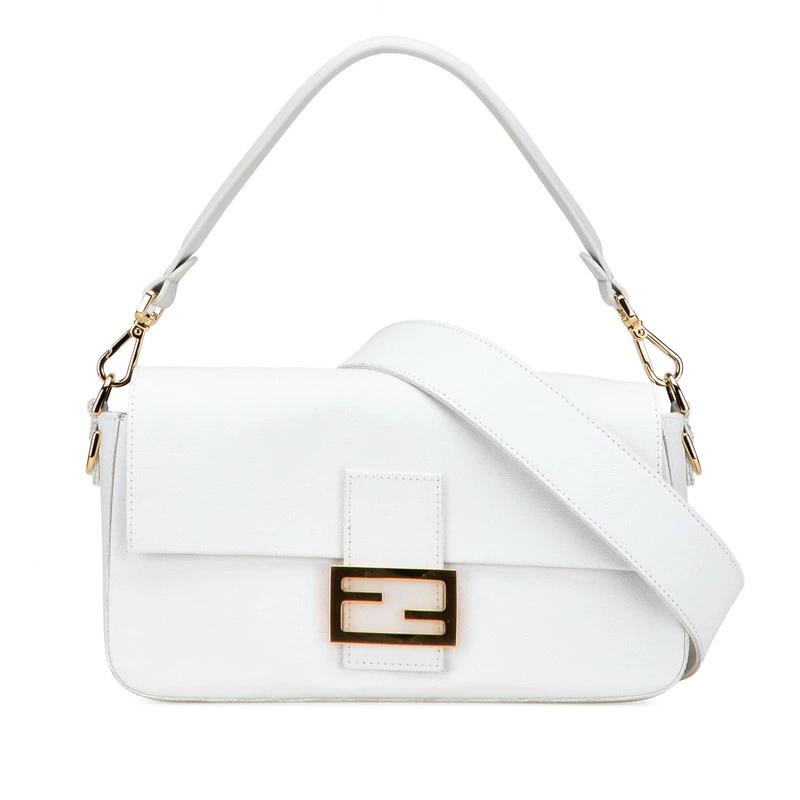
Pre-owned Fendi Baguette bag available on ZenLuxe.
Buying a Baguette today is really about choosing which chapter is the right one.
Vintage and early-2000s pieces can feel like true time capsules. Anniversary re-editions and modern seasonal versions tend to offer a more current wear experience, sometimes with updated proportions, strap options, or finishes. The “right” one depends on whether the goal is archival energy or daily ease.
Because the Baguette is so instantly recognizable, it is also a frequent target for counterfeiters, which makes seller standards and authentication especially important when buying pre-owned. Japan-based platform ZenLuxe operates with that reality in mind, combining Japanese resale standards with clear condition photos, solid return terms, and an airtight Entrupy authentication.
For shoppers worldwide, it opens the door to Japan’s exceptionally maintained second-hand Fendi Baguettes, all available to shop online and delivered directly to the doorstep.
About The Writer
Meet Mariam — a fashion writer who lives and breathes all things vogue and glamour. For her, the most therapeutic aspect of fashion goes beyond simply shopping for the latest styles that appear in stores; it’s fully experiencing this glamorous world from the little details to the big moments (there's nothing quite like the thrill of flipping through a sleek fashion magazine, is there?).