
(Courtesy of @prada)
Contents
- Prada nailed the “smart cool” energy Gen Z relates to.
- The nylon comeback turned Prada into a daily uniform (again).
- Gen Z grew up watching The Devil Wears Prada—and it stuck.
- Gen Z looks past aesthetics and judges real “value.”
- Prada speaks “trendy” without chasing the trend.
- Collaboration matters more than “lone genius” to Gen Z.
- Prada fits perfectly into Gen Z’s resale-first mindset.
- Bottom line: how Prada keeps Gen Z invested.
- About The Writer
“Youth is the future,” and Gen Z should be celebrated, according to Prada.
When Prada opened its first Milan boutique in 1913, it would have been impossible to imagine that its influence would stretch this far into the future.
More than a century old, Prada somehow feels right at home with the youngest generation. In resale behavior, Prada has been reported as Gen Z’s most searched brand on The RealReal. Looking at wider fashion demand, Lyst reported a 37% rise in searches for the Italian luxury group in the closing months of 2022.
Prada’s appeal among Gen Z plays out in real time across fashion FYP feeds. More often than not, the youngest fashion figures show up in at least one Prada piece for an effortlessly cool Insta-ready moment, from nylon Re-Edition bags and chunky Monolith loafers to sleek kitten heels and ready-to-wear with clean lines and self-expressive details.
So how did a runway-driven fashion house become a daily obsession for people who shop through screenshots and TikTok moodboards? Here’s the full scoop.
Prada nailed the “smart cool” energy Gen Z relates to.
(Courtesy of The Guardian)
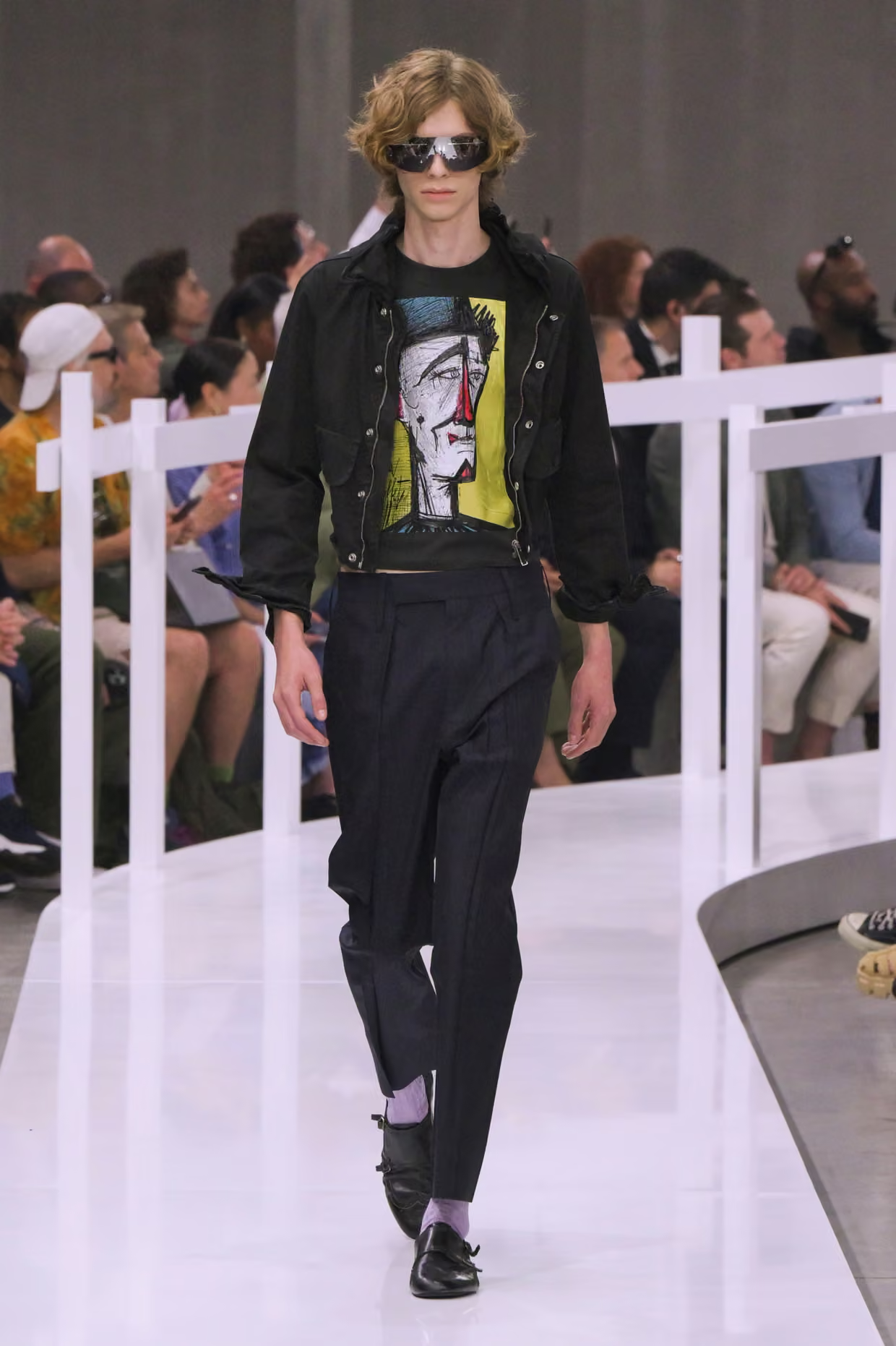
There is a certain formula Gen Z responds to, and it is not accidental. The look has to feel planned but relaxed, self-aware but not obvious, cool without explaining itself. Prada understood this long before it ever had a moment with Gen Zers, building that layered sensibility decades ahead of the mainstream curve.
The current wave shows up in looks like office siren, where vintage-coded tailoring meets glossy minimal accessories and signals confidence without feeling overly polished. Prada slips into that aesthetic effortlessly, and resale platforms have clearly picked up on it.
Teen Vogue pointed to Prada’s alignment with Y2K energy and the office siren mood as key reasons behind its Gen Z resale popularity. On Japan-based platform ZenLuxe, the Italian label is seeing strong demand among global shoppers, with especially trend-driven pieces like the nylon bags selling quickly once listed.
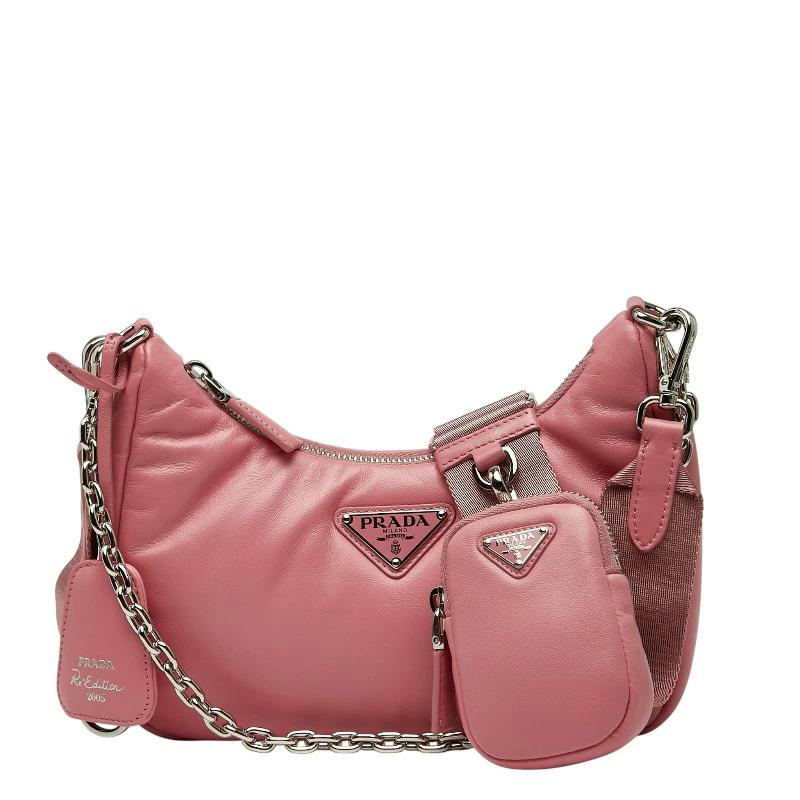
Pre-owned Prada Re-Edition 2005 pink bag available on ZenLuxe.
What matters here is not the label alone; it’s the vibe. Prada feels grown up without turning dull, seductive without trying too hard, and classic with just enough quirkiness to stay interesting.
That “strange in a good way” aspect is part of Prada’s long-running design DNA. The brand has long challenged traditional ideas of what looks beautiful or flattering, which fits perfectly in an era where “pretty” is no longer the goal and individuality is the real flex.
The nylon comeback turned Prada into a daily uniform (again).
(Courtesy of WWD)
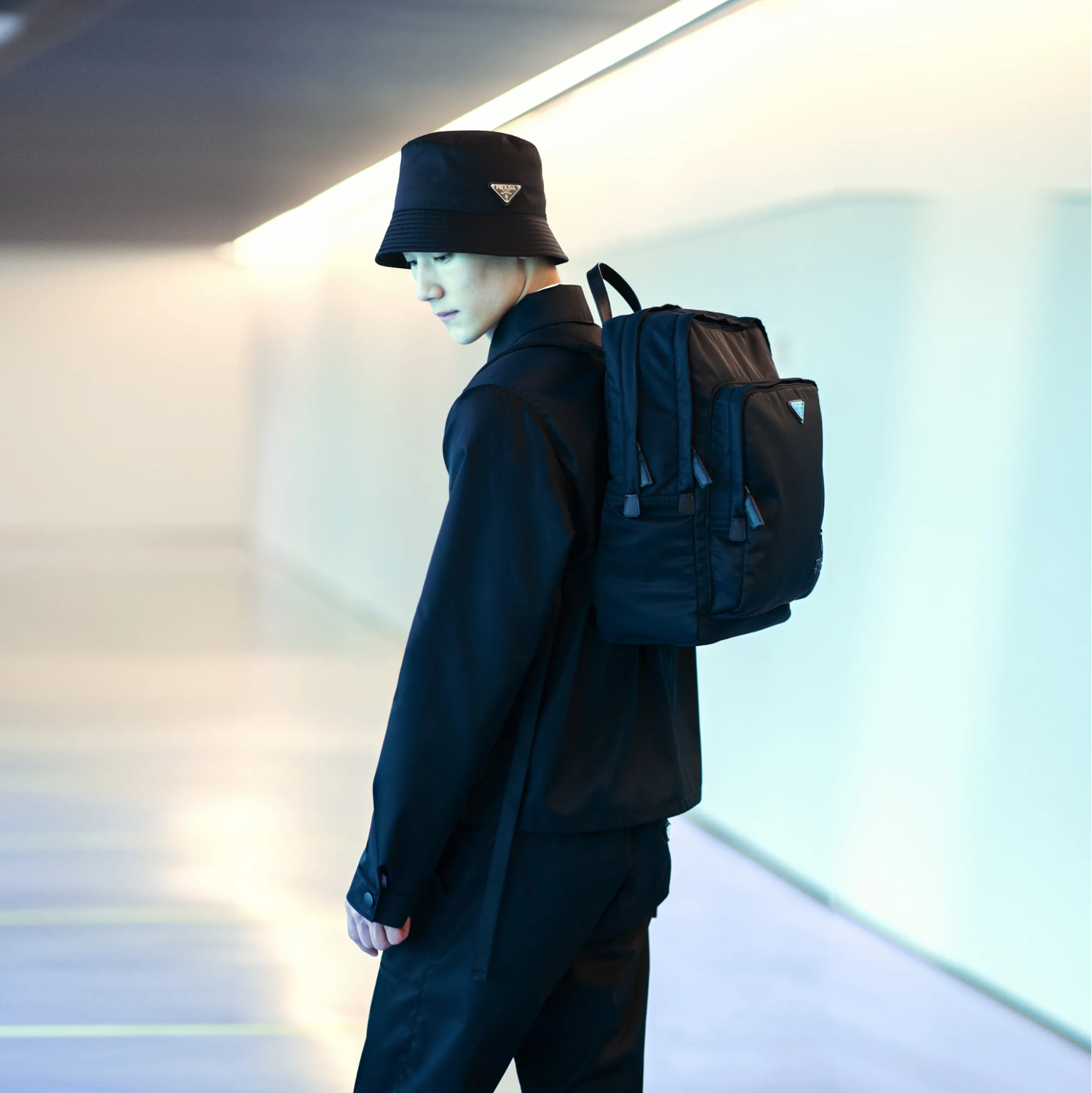
Prada plays the long game. By constantly revisiting its own archive and giving it a modern twist, the brand turned old seasons into a kind of cultural shorthand for those “who know.”
One Prada item became an unspoken Gen Z code for luxury: the small but mighty nylon shoulder bag rooted in early-2000s culture. The brand’s renewed relevance among younger shoppers did not happen overnight. It steadily built toward a breakout around 2019, when Prada unveiled the Re-Edition collection.
The revived 2000 and 2005 silhouettes, now made from ECONYL nylon, were quickly embraced by a new generation of style leaders, including Bella Hadid, Kendall Jenner, and Kaia Gerber.
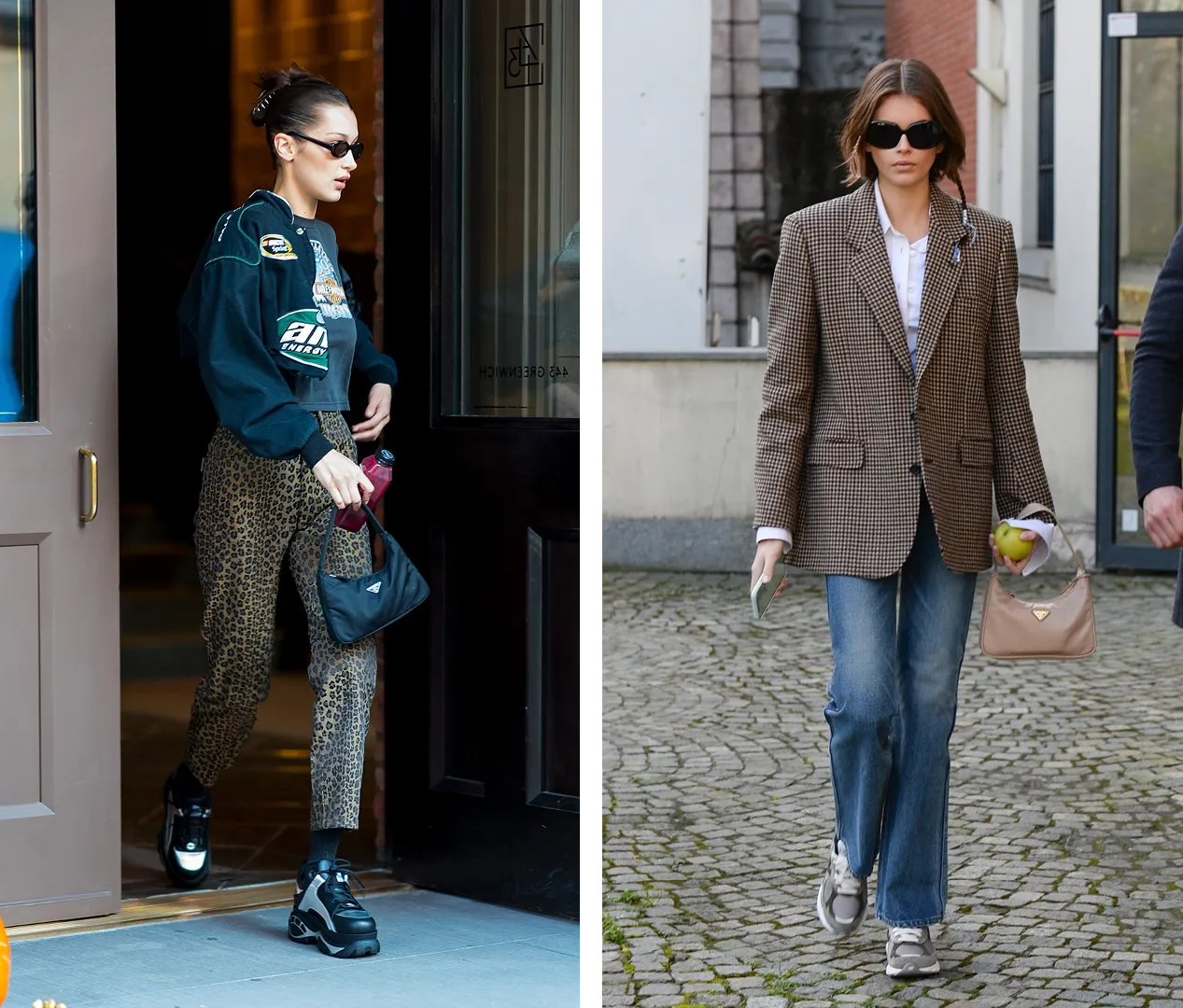
(Courtesy of Vogue)
The mini bag with the signature triangle plaque found its way onto the arms of fashion’s most followed names, proving its staying power even when the lockdown timing seemed unlikely.
Design-wise, Prada’s Re-Edition line treats these bags as early-2000s icons, reintroduced with modern materials and stylish updates. That framing matters; Gen Z approaches fashion through reference, not chance. Items with cultural memory are easier to adopt.
When a luxury bag already exists in paparazzi photos, old films, television moments, and archived runway imagery, it naturally slides back into contemporary styling with ease, familiar yet new.
And nylon itself is a Gen Z magnet. It looks modern, reads sporty and practical, and pairs easily with sneakers and workwear. It also avoids loud logo energy, which speaks to younger buyers who want something recognizable to fashion insiders but not flashy to everyone else.
Gen Z grew up watching The Devil Wears Prada—and it stuck.
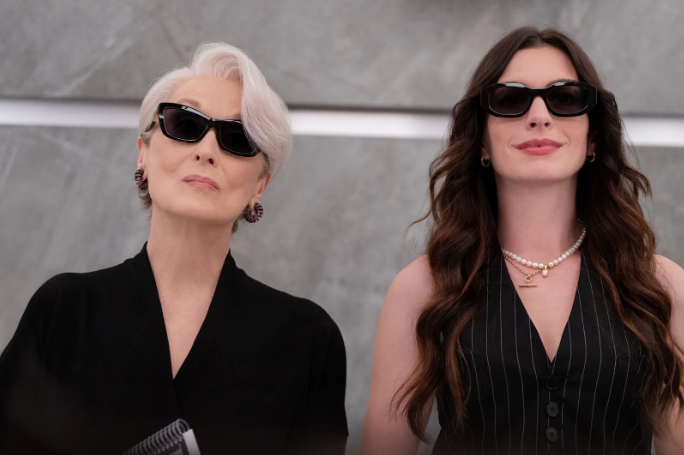
(Courtesy of Vogue)
Gen Z does not treat The Devil Wears Prada like an old movie that belongs to another era. It plays like a style textbook and a meme machine at the same time.
The aughts-era film cemented its status through unforgettable fashion moments, Meryl Streep’s career-defining performance as Miranda Priestly, and a storyline that captured the pressure, ambition, and allure of high-fashion workplaces, all delivered with sharp wit and unexpected depth.
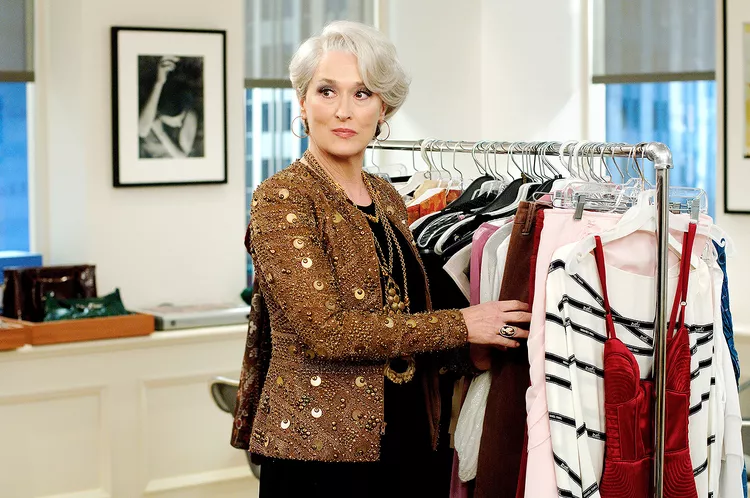
(Courtesy of PEOPLE)
Prada entered Gen Z consciousness long before wallets ever opened. Watching The Devil Wears Prada on repeat turned the label into a shared visual code, embedded in pop culture rather than locked behind luxury distance.
The silhouettes, the sharp thinking, and that cerulean monologue became early lessons in how style communicates authority and awareness. By the time Gen Z reached shopping age, Prada already lived in their fashion memory, making the attachment feel natural, almost inevitable.
Gen Z looks past aesthetics and judges real “value.”
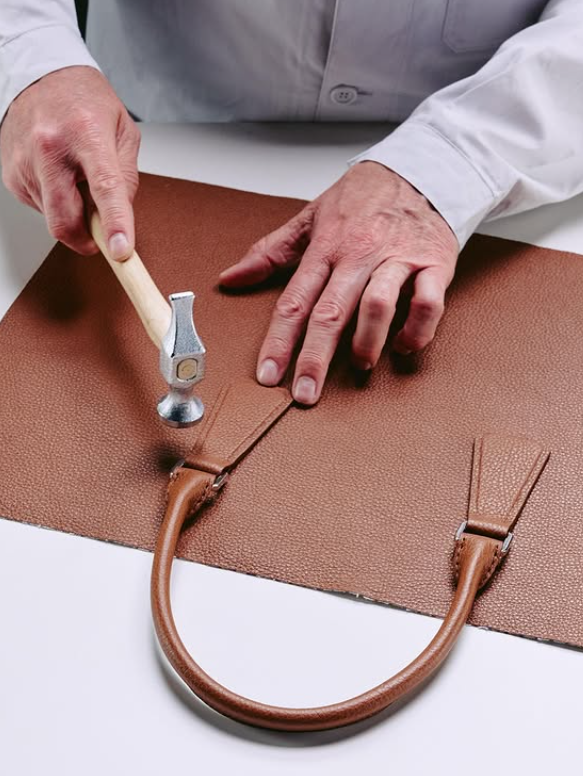
(Courtesy of @prada)
Gen Z may still lead with aesthetics, but values play a real role in deciding which brands feel “worth it,” especially at luxury price points.
Reuters notes that younger luxury consumers prioritize authenticity and sustainability, often mixing high-end pieces with thrifted finds rather than buying everything new. That works in Prada’s favor, because sustainability is not positioned as a trend but embedded into the entire brand DNA.
Prada Re-Nylon is built around ECONYL, a regenerated nylon yarn that can be recycled repeatedly without compromising material quality. The yarn itself is created by reclaiming discarded plastics collected from landfills and oceans around the world.
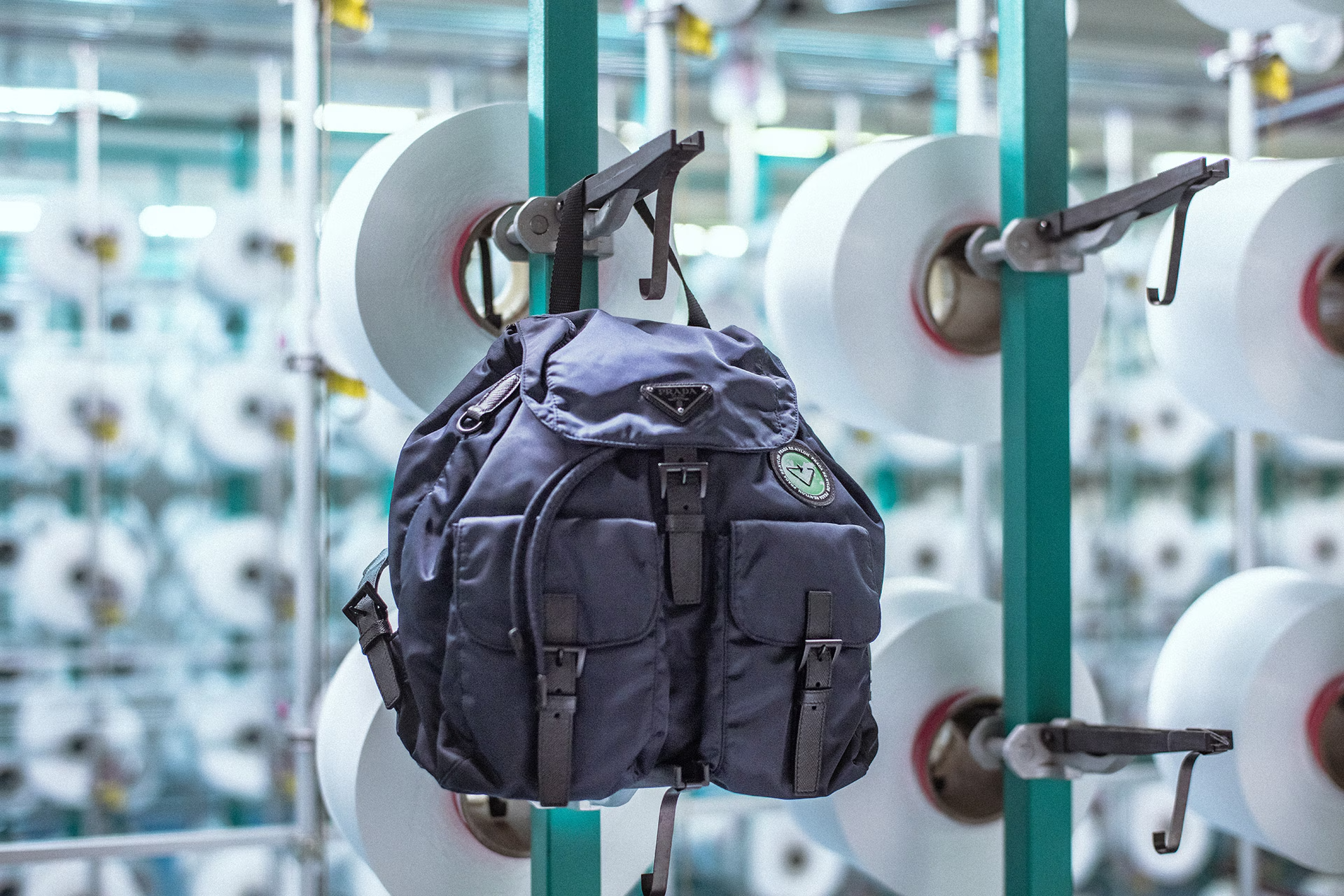
(Courtesy of PradaGroup)
Prada pushed the idea further by making Re-Nylon central to major partnerships. In the adidas for Prada Re-Nylon collaboration, Prada and adidas framed the project around shared sustainability goals, with Re-Nylon fabric and production rooted in Italy.
The announcement also confirmed that Prada had fully transitioned away from virgin nylon by the end of 2021. For Gen Z, that hits the sweet spot, the iconic nylon stays, but now it comes with a modern reason to exist.
Prada speaks “trendy” without chasing the trend.
View this post on Instagram
Many legacy luxury brands struggle with Gen Z because they try to “go viral” in obvious ways. Gen Z can smell that instantly. Prada tends to do the opposite, staying consistent, then letting culture do the remixing.
That consistency shows up clearly in large-scale demand tracking. Lyst’s Index, built on real shopper behavior and engagement signals, has repeatedly placed Prada at or near the top, often linking spikes in searches to cohesive collections.
Even for shoppers who do not follow runway fashion closely, the brand still filters into feeds through styling clips, memes, and instantly recognizable product moments.
Partnerships matter most when they feel genuinely aligned. The adidas for Prada Re-Nylon chapter was not a simple logo exchange. It was positioned as a meeting point between Prada craftsmanship and adidas sportswear heritage, layered with digital activations that invited fans into the story.
That approach feels unmistakably Gen-Z-coded, built on collaboration, participation, and identity, without turning the house into a temporary trend costume.
Collaboration matters more than “lone genius” to Gen Z.
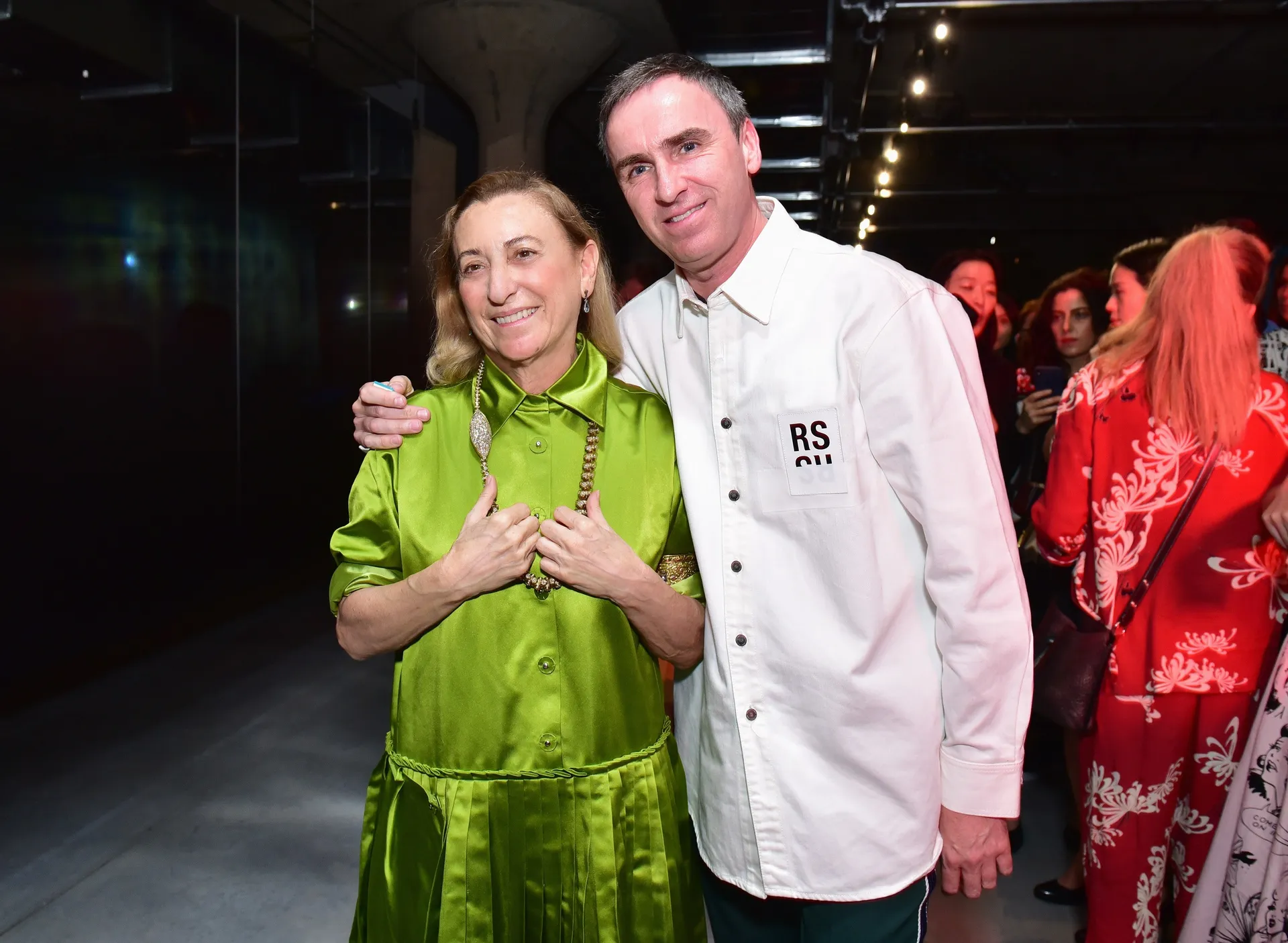
(Courtesy of Vogue)
When Prada announced Raf Simons joining as co-creative director alongside Miuccia Prada, the move was framed as a creative dialogue rather than a single-author vision, with shared responsibility and a first joint womenswear collection set for Spring Summer 2021. That distinction matters far beyond industry headlines.
Gen Z tends to value collaboration over lone genius mythology. which makes a co-creative model feel current and credible. It also helped deliver collections that feel sharper and more in conversation with culture, while still preserving Prada’s cerebral foundation.
The momentum shows up financially as well. On 4 March 2025, the Board of Directors of Prada S.p.A. approved the consolidated results for the year ended 31 December 2024, reporting net revenues of €5.4 billion, up 17 percent year over year at constant currency and well above the market. Retail sales reached €4.8 billion, up 18 percent year over year, driven by like-for-like full-price volumes and a strong, consistent fourth quarter.
This consistency supports a broader perception: Prada is not riding short-term hype, it is advancing with intention.
Prada fits perfectly into Gen Z’s resale-first mindset.
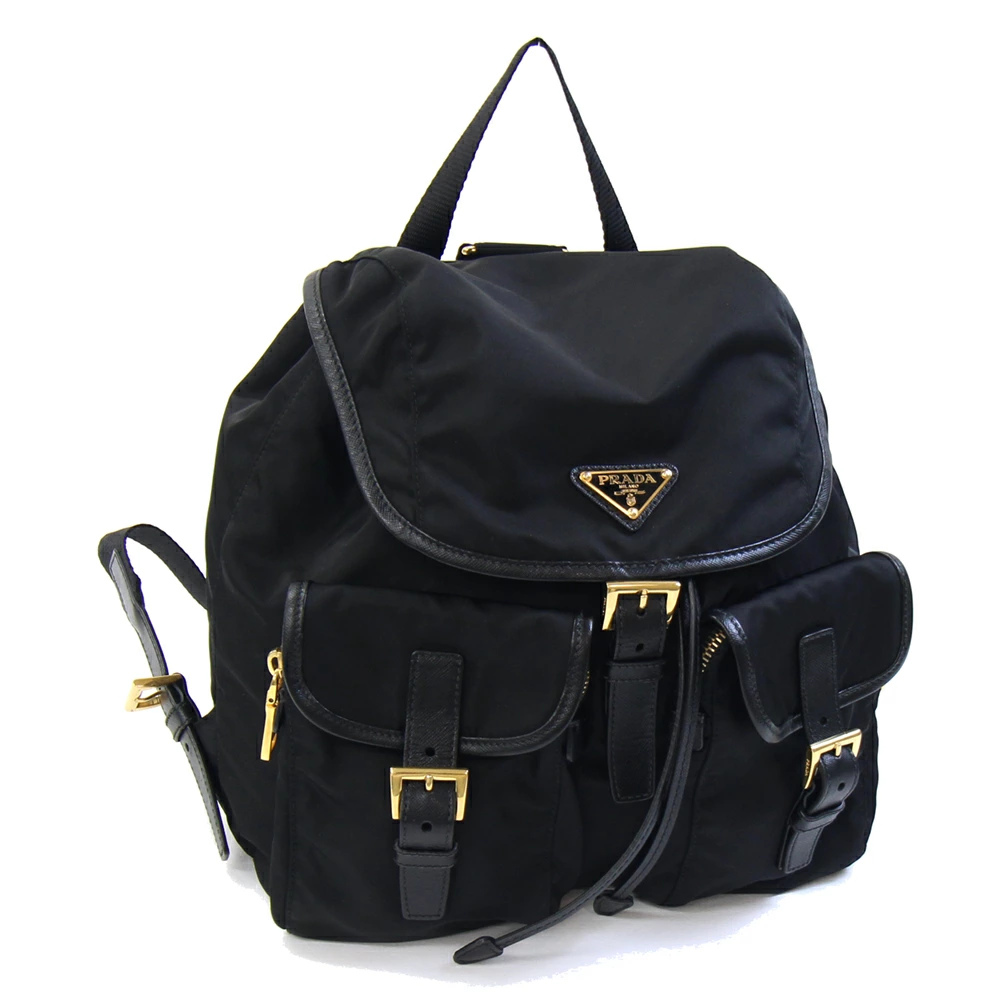
Pre-owned Prada Nylon Backpack available on ZenLuxe.
Gen Z wants iconic pieces that can be styled a hundred ways, and many young shoppers are price-conscious even when they buy luxury. Prada is not a “cheap entry” brand at retail. The Prada bags and ready-to-wear sit at prices that can feel out of reach for many younger shoppers. Yet Gen Z still finds a way in because the buying behavior is different.
Instead of treating luxury as a one-time splurge that must be bought new, many younger shoppers treat it as a smart hunt. The goal is to get the real thing in great condition at a lower cost, often through resale and consignment.
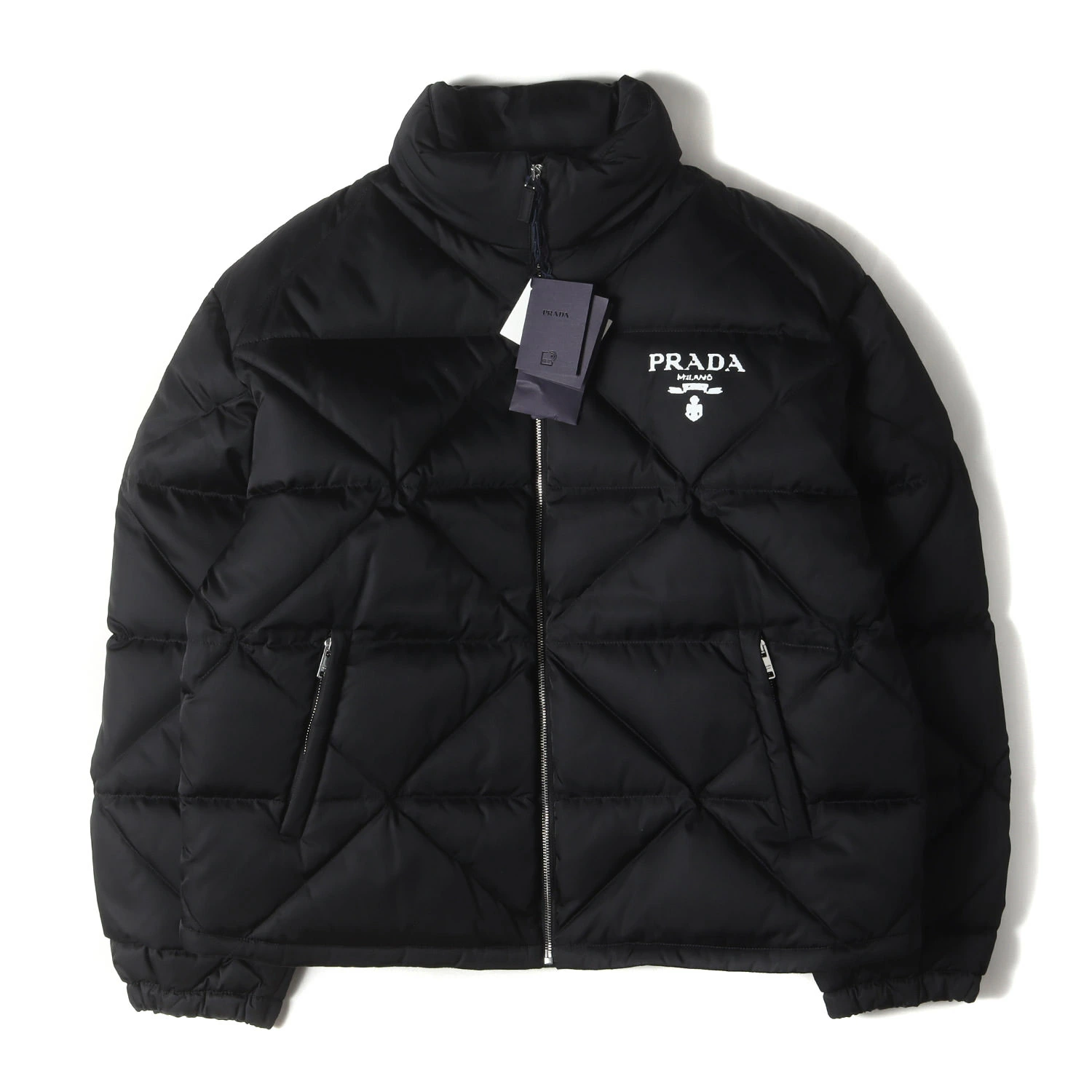
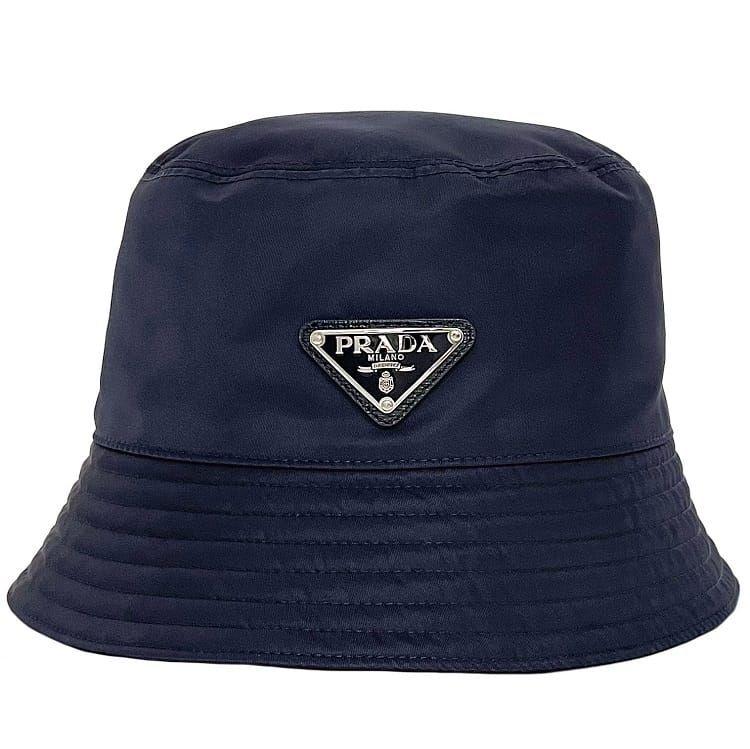
Japan-based resale platform ZenLuxe is built for shoppers who want the real thing without the retail sting. The platform brings together a large collection of pre-owned Prada sourced from Japanese sellers, with Entrupy verification on every piece, allowing global shoppers to focus on the find itself rather than second-guessing authenticity.
Once you place an order, the ZenLuxe team in Japan handles the rest, ensuring direct delivery to your doorstep without frustrating shipping delays.
Bottom line: how Prada keeps Gen Z invested.
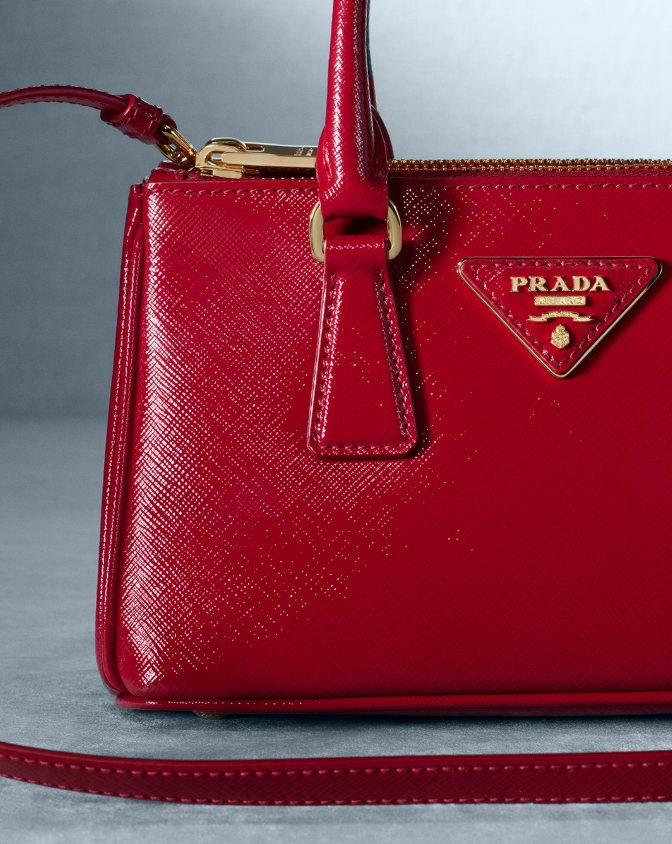
(Courtesy of @prada)
Prada’s pull with younger shoppers is not powered by a single viral bag; it runs on a tight loop. A distinct aesthetic that feels intelligent and a little offbeat. A Y2K archive translated into everyday wear through Re-Edition icons. A sustainability story grounded in a real material shift via Re-Nylon. A creative direction that evolves without losing coherence. And a resale ecosystem where access feels realistic, with platforms like ZenLuxe offering authenticated Japan-sourced Prada pieces at reasonable prices.
That’s why Prada remains long after the trend cycle ends.
About The Writer
Meet Mariam — a fashion writer who lives and breathes all things vogue and glamour. For her, the most therapeutic aspect of fashion goes beyond simply shopping for the latest styles that appear in stores; it’s fully experiencing this glamorous world from the little details to the big moments (there's nothing quite like the thrill of flipping through a sleek fashion magazine, is there?).