(Courtesy of Harper's BAZAAR)
What do gowns, mahjong sets, violins, and even caviar have in common? Each has been safely tucked into a legendary Louis Vuitton trunk, the ultimate symbol of secure, spacious, and luxurious travel.
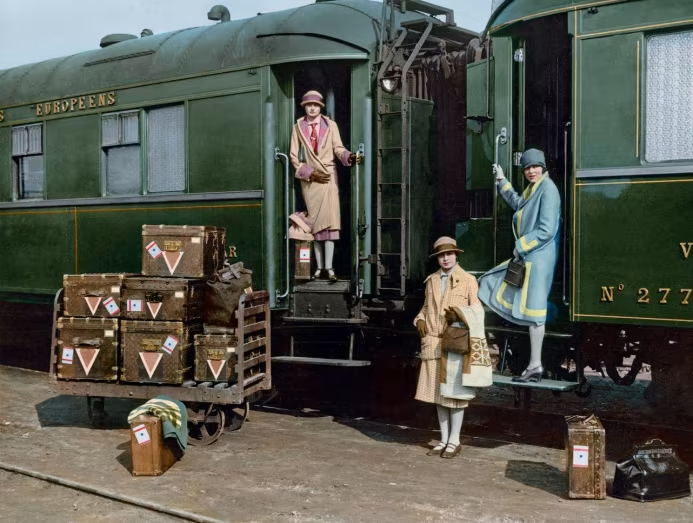
It all started in 1858 when Louis Vuitton broke new ground with the flat-topped trunk. The French luxury house quite literally turned travel on its head, creating a design that could be neatly stacked instead of rolling around like their domed predecessors.
The ingenious trunk quickly found favor with the elite, defining what luxurious, first-class travel should both look and feel like. Before long, Vuitton’s cult trunk wasn’t just about packing essentials—it turned into a showpiece for displaying rare and treasured objects.
That said, here’s a closer look inside the making of a modern Louis Vuitton trunk, including its materials, craftsmanship, and the genius that keeps it relevant after more than 160 years. After all, as Louis Vuitton himself once believed, “No dream is too large or object too complex.”
Thinking Outside the Box: How the LV Trunk Revolutionized the Way the World Travels
(Courtesy of CNA Luxury)
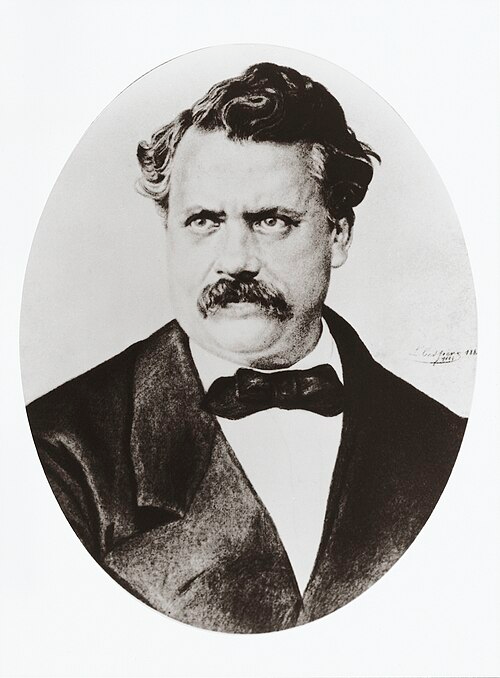
The ultra-wealthy see Louis Vuitton pieces as the pinnacle of luxury, with those LV initials instantly evoking a sense of status and exclusivity. Yet few realize they trace back to a humble country boy. Louis Vuitton was born in the quiet hamlet of Anchay, nestled in the Jura Mountains, where his family lived modestly, working the land and crafting with their hands.
Louis Vuitton’s journey as a trunk maker began long before his brand ever existed. In 1837, a determined 16-year-old Louis walked to Paris and started apprenticing under Monsieur Maréchal.
At the time, people traveled by carriages, boats, and trains, and luggage endured a fair amount of chaos, with luggage rarely surviving the journey unscathed. Louis quickly earned a reputation as one of Maréchal’s most dependable craftsmen, mastering the art of creating made-to-measure boxes—and eventually, perfectly fitted trunks for each client’s needs.
Seventeen years later, his skill and ambition led him to open his own atelier at 4 Rue Neuve-des-Capucines, just steps from Place Vendôme, setting the stage for a new era of refined travel. Louis Vuitton’s name widely circulated among high society, and he’d even been appointed the personal trunk and box maker for the Empress of France, Eugénie de Montijo.
Above the shop door, a sign proudly declared his expertise: “Securely packs the most fragile objects. Specialising in packing fashions.”
(Courtesy of Wikipedia)
In 1886, Georges Vuitton transformed the way people traveled by inventing a groundbreaking lock system that made every trunk feel like a true treasure chest—beautiful on the outside, and nearly impossible to break into.
Travelers used to pack everything they owned into wardrobe trunks and flat cases—prime targets for thieves on long journeys. Determined to protect his clients’ belongings, Louis Vuitton set out to create something safer. By 1886, he and his son Georges developed a groundbreaking single lock system with two spring buckles.
After years of refinement, Georges patented the design and famously challenged Harry Houdini—the era’s greatest escape artist—to break free from a Vuitton trunk. Houdini never took up the dare, and the lock’s unmatched security remains a testament to its brilliance. More than a century later, that same ingenious system still protects Louis Vuitton's legendary trunks.
- Did you know? Louis Vuitton’s original trunk design was such a hit that imitators rushed to copy it. But Vuitton stayed one step ahead—first with striped canvas in 1872, then the refined Damier pattern in 1888, and ultimately, the world-famous Monogram canvas in 1896.
Asnières: The Beating Soul of Louis Vuitton Trunk Craftsmanship
(Courtesy of Louis Vuitton)
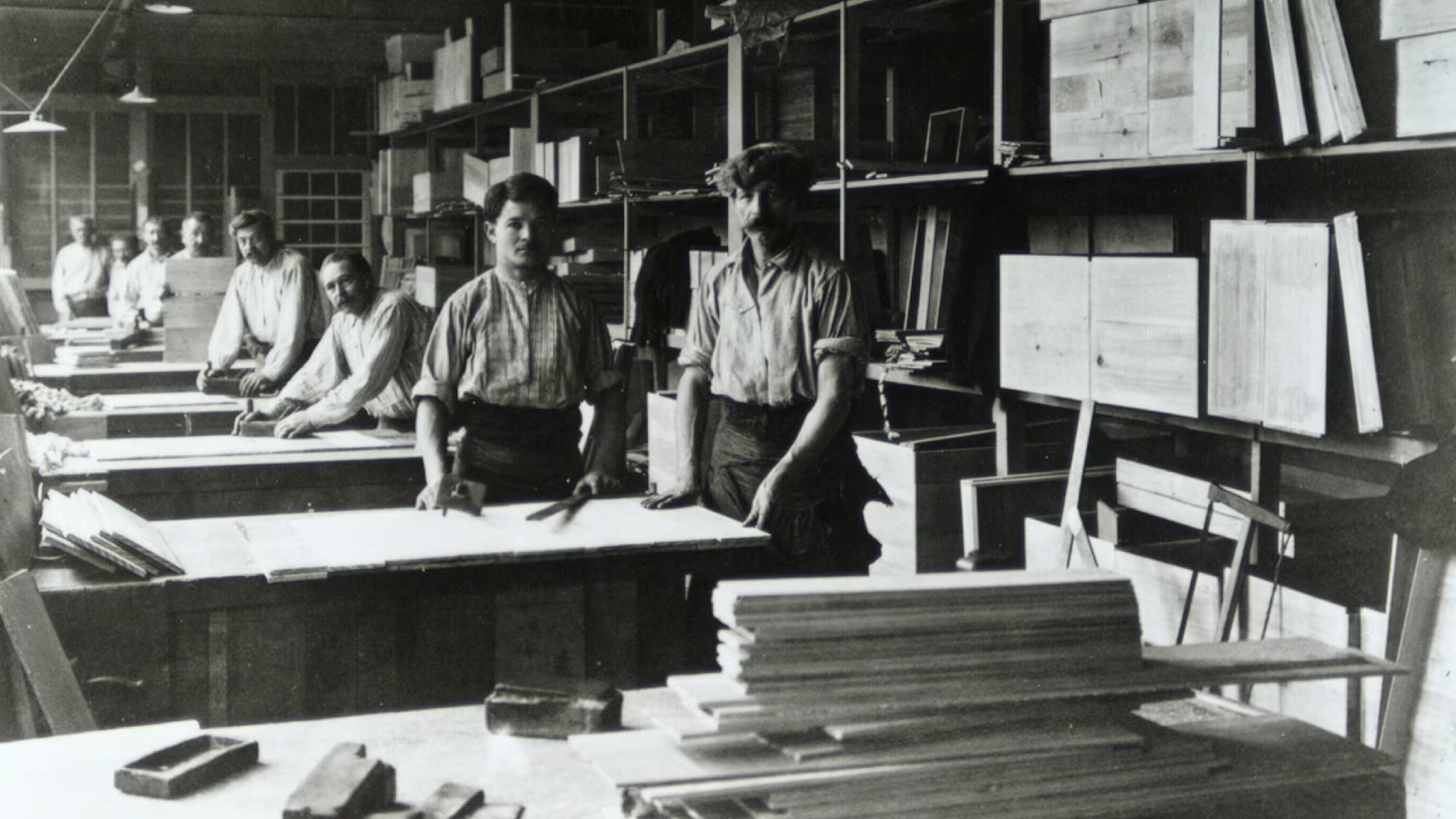
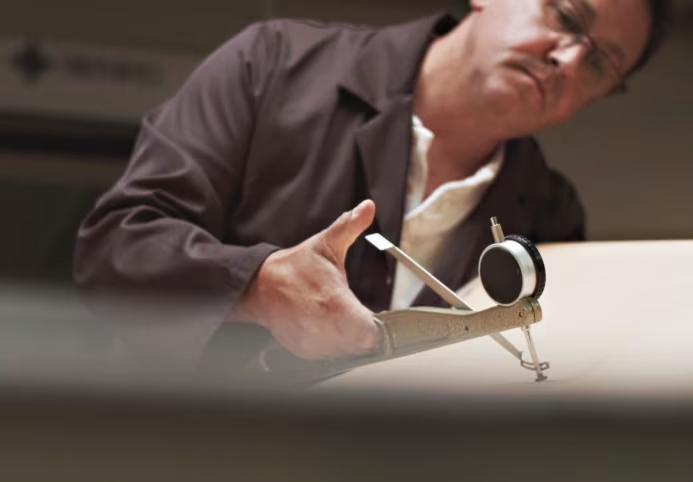
Louis Vuitton’s legacy lives on in Asnières, a quiet Parisian suburb where the brand’s most skilled artisans—over 330 of them—still craft trunks, luggage, and custom orders the traditional way: entirely by hand.
Some of these creations take months, even years, to complete.
Asnières remains deeply symbolic for Louis Vuitton, serving as both the brand’s birthplace and the family’s former home, ideally positioned near the River Seine for easy delivery of precious woods and raw materials.
There’s a warmth that fills the air at Asnières, one that only comes from generations of shared passion. Many of Louis Vuitton’s artisans began as apprentices themselves and now pass on the secrets behind the Maison’s iconic trunks to the next generation.
United by a shared devotion to excellence, they continue to craft extraordinary pieces within this historic atelier, where tradition and innovation continue to meet in perfect harmony.
(Courtesy of CNA Luxury)
Craftsmen in the Asnières have created an astonishing variety of bespoke trunks over the years—made to hold watercolor palettes, holiday decorations, fine tea sets, and even a collection of baby teeth for one particularly imaginative client.
Each special order carries its own story, and for the artisans, there’s something particularly rewarding about turning someone’s most unusual wish into a handcrafted reality.
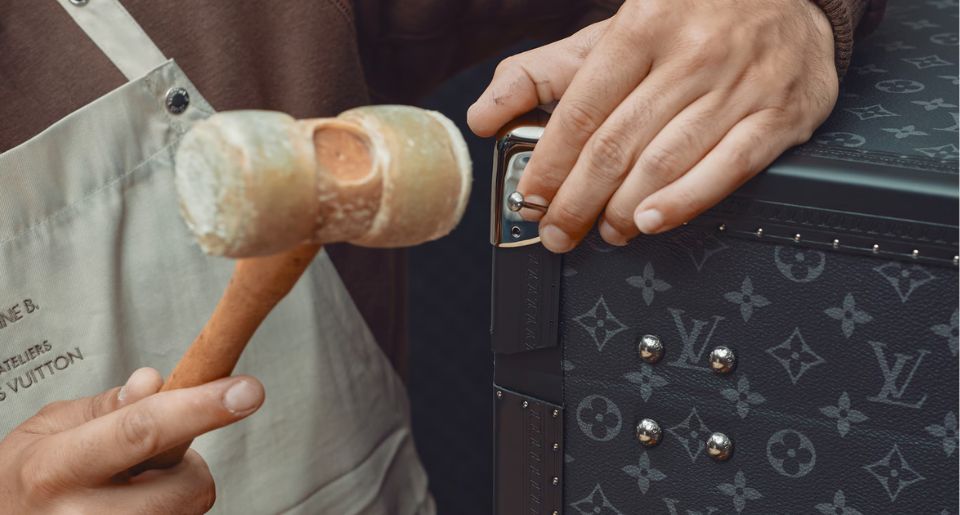
One of the atelier’s most admired craftsmanship secrets is lozine—a signature composite that keeps the luggage perfectly sealed against moisture. Around 500 to 1,000 studs are used to attach each carefully cut piece to the trunk, all hammered in by skilled hands.
Madeleine, a Louis Vuitton craftswoman who has spent five years honing her artistry with the Maison, says the greatest pride comes when she sees the trunks either on display or in use. In Madeleine’s words, the pieces they make hold a quiet kind of grandeur—a great beauty that is “majestic, complete and complex.”
- Fun fact: The Maison has created a dazzling collection of bespoke trunks crafted to hold some of the world’s most prestigious sporting trophies. Continuing its long-standing tradition of savoir-faire, each trunk is meticulously handmade by master artisans at the historic Asnières workshop. From the FIFA World Cup to the NBA Finals, these creations prove that even triumph deserves to travel in style!
How Louis Vuitton’s Iconic Trunks Are Made
Making a Luxury Louis Vuitton x Yayoi Kusama Trunk From Start to Finish | Vogue France
To grasp how Louis Vuitton’s storied trunks are truly made, the creation of the Louis Vuitton x Yayoi Kusama trunk offers a fascinating peek behind the curtain. This artistic fusion of Kusama’s dotted world and Vuitton’s timeless design transforms tradition into something almost hypnotic.
Below is a complete behind-the-scenes look at how the Louis Vuitton x Yayoi Kusama trunks come to life—from the very first cut all the way to the final, gleaming polish.
Step 1: Textile Reinforcement
The process begins by lining the inside of the case with cotton fabric. These fabric strips reinforce the structure and strengthen the entire case from within, forming the foundation on which the rest of the craftsmanship is built.
Step 2: Upholstering the Exterior Frame
Next comes the outer layer. The artisan coats the surface with glue and applies the canvas, an essential and highly decorative part of the trunk. This canvas is unique because it brings together the best of both worlds—Louis Vuitton’s classic Monogram and Yayoi Kusama’s distinct artistic touch. The result is a pattern that feels almost touchable and so instantly recognizable, it could only come from this iconic collaboration.
Step 3: Upholstering the Interior Frame
Inside, the carpenter’s pre-made frame is upholstered to form the case’s internal skeleton. For this step, artisans use a material known as Vuittonite, made from bone and designed to protect delicate surfaces without causing damage.
Step 4: Quilting the Lid
In the final stages of crafting, artisans add quilted padding to the inside of the trunk lid. Beyond its beauty, the quilting serves a practical purpose: it secures and cushions the bottles stored inside, keeping them perfectly in place during transport.
Step 5: Attaching the Metal Parts
This stage gives the trunk its strength and shine. Metal elements—corners, brackets, hinges, and the signature lock—are attached to reinforce the structure and protect it from shocks. Each corner is carefully fitted, the ridges finished, and finally, the Louis Vuitton lock is installed. To make the trunk portable, a handle is added by hand.
Step 6: Creating the Leather Tab
The artisan then grooves the leather tab, carving subtle lines to highlight the contours of the trunk. Once shaped, all five sides of the tab are hand-colored to achieve a perfectly even finish.
Step 7: Attaching the Leather Tab
The tab is carefully affixed to the case—one of the subtle yet defining touches that give Louis Vuitton trunks their polished character.
Step 8: Inserting the Interior Support
A custom wooden insert is then added inside to hold three bottles. This piece fits perfectly within the interior, demonstrating the precision of Vuitton’s carpentry work and attention to detail.
Step 9: Adding the Collaboration Badge
The final step is attaching the Louis Vuitton x Yayoi Kusama badge. This plaque, designed by Kusama herself, marks the trunk as part of the collaboration—making each one an exclusive work of art that merges traditional craftsmanship with contemporary creativity.
Why Secondhand Louis Vuitton Trunks Make Smart Investments
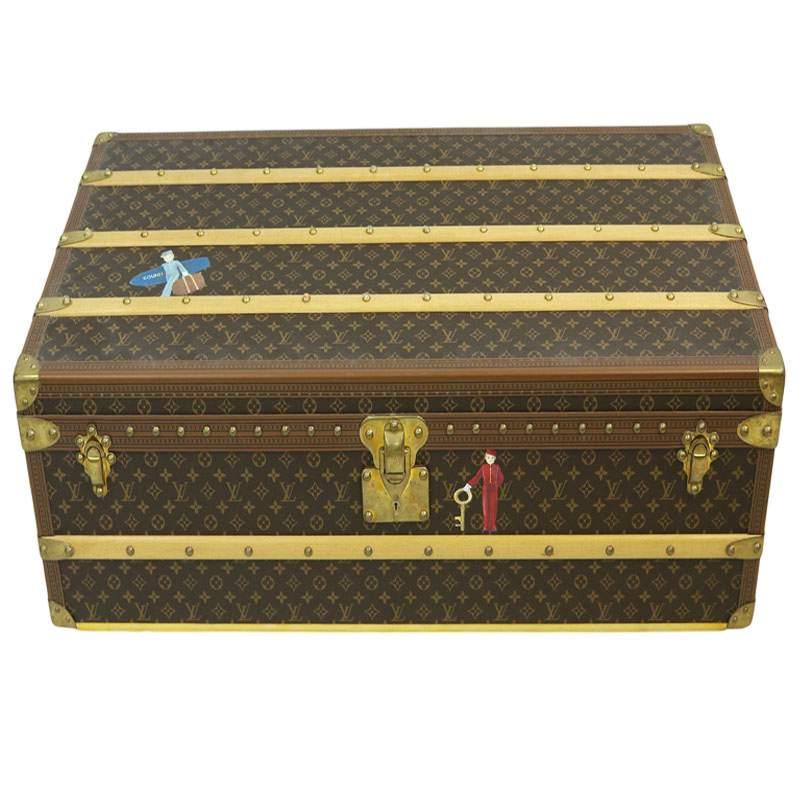
A second-hand Louis Vuitton Monogram trunk available on ZenLuxe.
The genius of Louis Vuitton lies in creating travel trunks that refuse to age. Even after decades, these icons remain in use—strong, elegant, and completely restorable, just as they were meant to be.
This long lifespan also makes them a smart investment when purchased secondhand. Buyers get the same meticulous craftsmanship and timeless design at a lower cost while embracing sustainability. And for anyone worried about counterfeits, ZenLuxe takes that stress away.
The Japan-based resale platform follows an uncompromising authentication process and curates only the best Louis Vuitton trunks and other elegant travel pieces, from vanity cases to sturdy luggage, all verified and ready for worldwide shipping.
Buying a secondhand Louis Vuitton means you can enjoy it endlessly—and when the time comes, reselling it is just as effortless (because really, who can say no to a good deal on Louis Vuitton?)
About The Writer
Meet Mariam — a fashion writer who lives and breathes all things vogue and glamour. For her, the most therapeutic aspect of fashion goes beyond simply shopping for the latest styles that appear in stores; it’s fully experiencing this glamorous world from the little details to the big moments (there's nothing quite like the thrill of flipping through a sleek fashion magazine, is there?).